On our road trip from Tokyo to Hakuba this past February, Tun and I decided to make a special detour to explore Kawagoe Hikawa Shrine. Having lived in the heart of Seoul for over a decade, I’m used to the fast-paced energy of a major capital, so escaping to the “Little Edo” atmosphere of Kawagoe was a breath of fresh air. The winter sky in Japan was that piercing, clear blue, and the crisp morning air made the whole experience feel like a genuine retreat.
If you’re planning a visit during the colder months, here is exactly what it felt like to wander through this 1,500-year-old sanctuary and a few things you should look out for.
About Kawagoe Hikawa Shrine
Located in the historic city of Kawagoe in Saitama Prefecture, this shrine is steeped in over 1,500 years of history. It is most famous as a sanctuary for En-musubi, the Shinto belief in “tying knots” or bringing people together—whether for romance, family, or professional connections. While many tourists visit the famous bell tower in the town center, Hikawa Shrine offers a more spiritual, interactive experience that feels deeply rooted in local tradition.
Beyond just its history, the shrine is known for its unique rituals that allow you to “play” with your fate. From fishing for fortunes to cleansing your spirit in a hidden stream, here are a few things you definitely shouldn’t miss during your visit.
The Grand Entrance
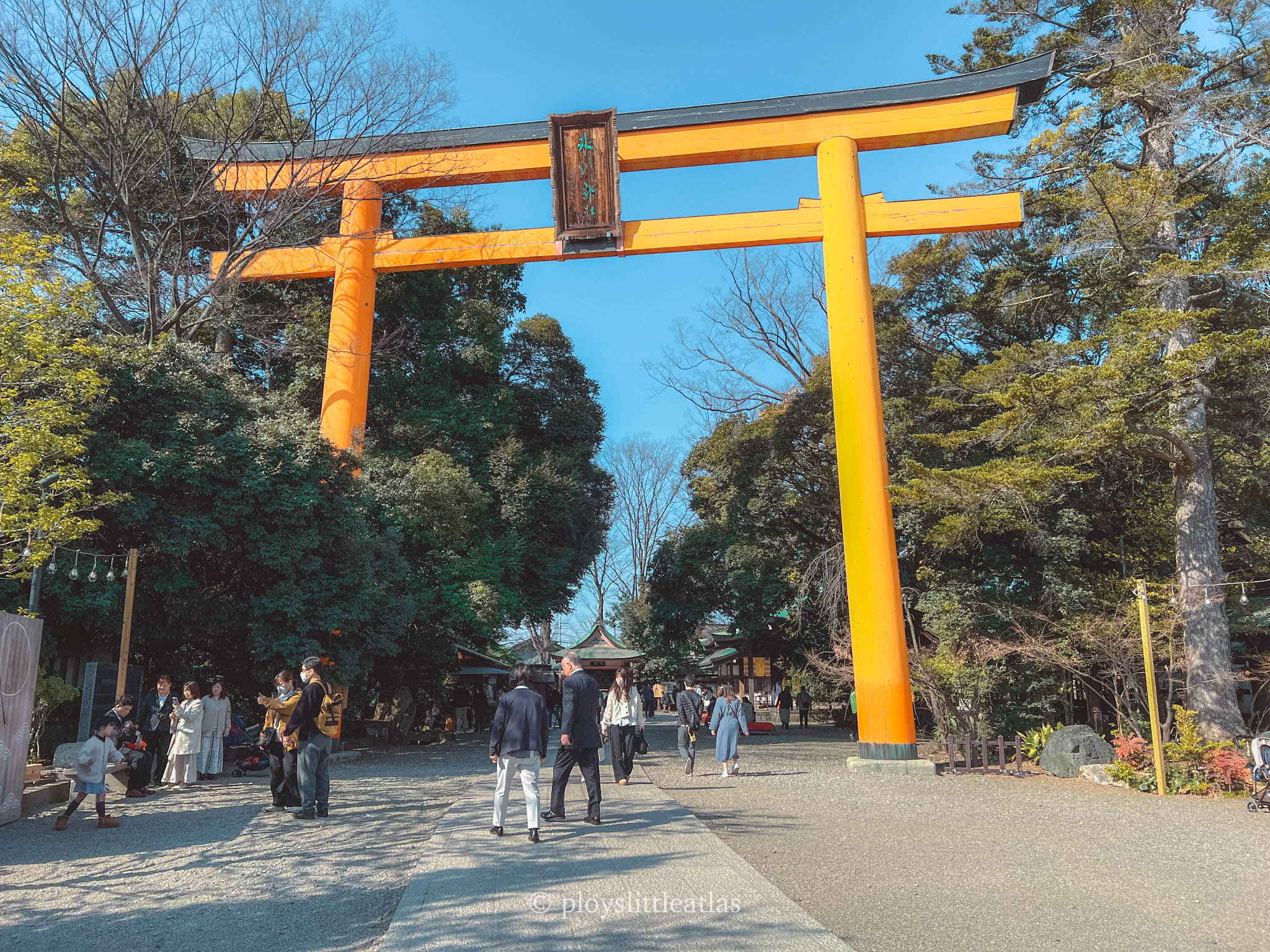
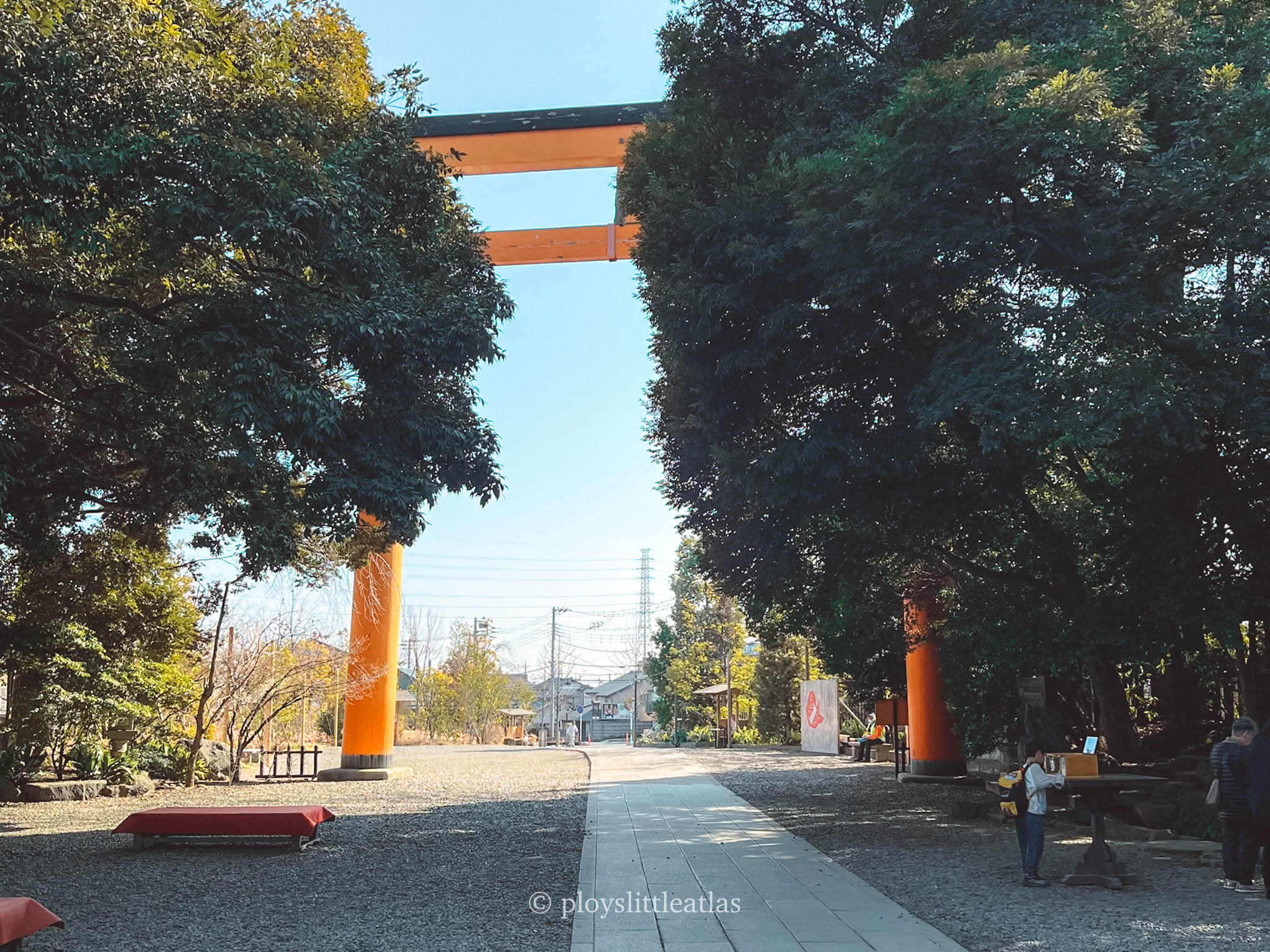
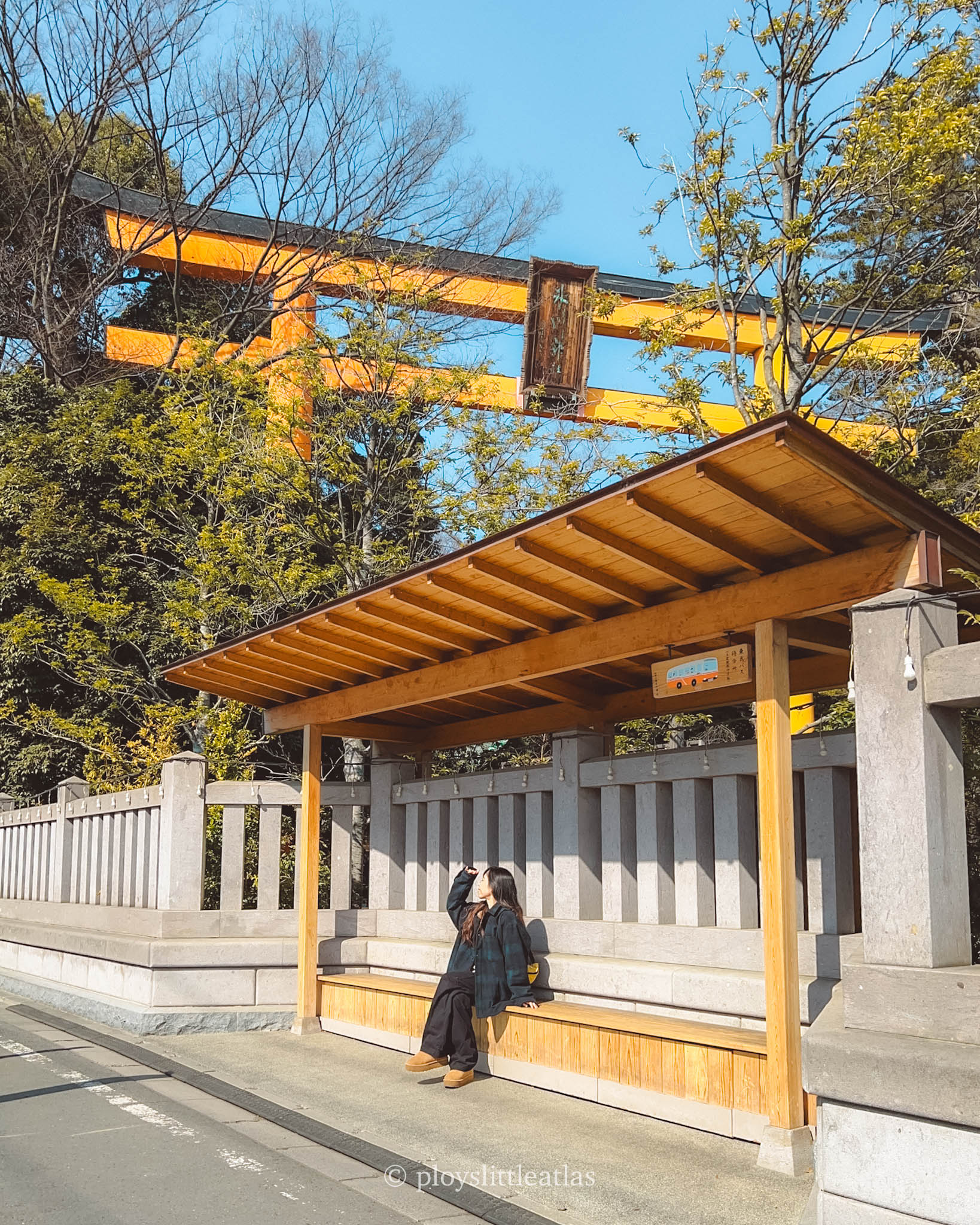
The first thing that hits you is the scale. The wooden torii gate at the main entrance is one of the tallest in Japan, and seeing it framed by the bare winter trees felt incredibly powerful. In February, the shrine isn’t as crowded as it is during the summer “Wind Chime Festival,” which I actually preferred. It felt more intimate, like we had stumbled upon a local secret.
Fishing for My Fortune (Literally!)
The highlight of the visit has to be the Tai Omikuji. Instead of just pulling a piece of paper from a box, you actually use a little bamboo fishing rod to hook your fortune!
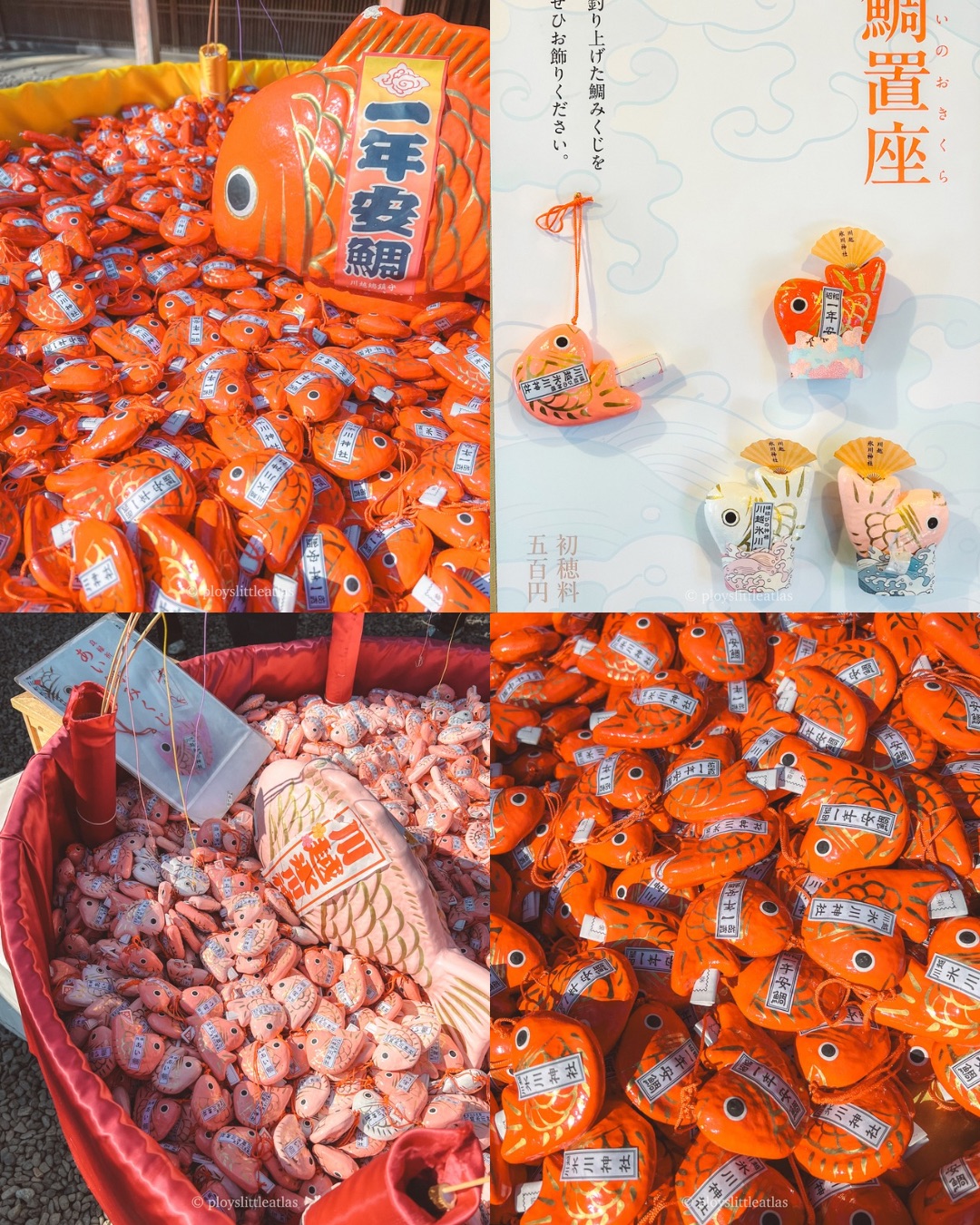
There were massive tubs filled with these cute, hand-painted fish:
- The Pink “Aitai” Fish: These are for luck in love and relationships (en-musubi).
- The Red “Ichinen An-tai” Fish: These are for a year of peace and safety.
It’s surprisingly addictive. I spent a good few minutes hovering my hook over the pile, trying to “catch” the one that felt right. It’s such a playful way to engage with Shinto traditions, and you get to keep the little fish as a souvenir.
Washing Away the “Old”
Near the back of the grand tori gate, there is a small, clear stream where a unique purification ritual takes place. For a small fee, you can receive a Hitogata—a human-shaped piece of white paper.
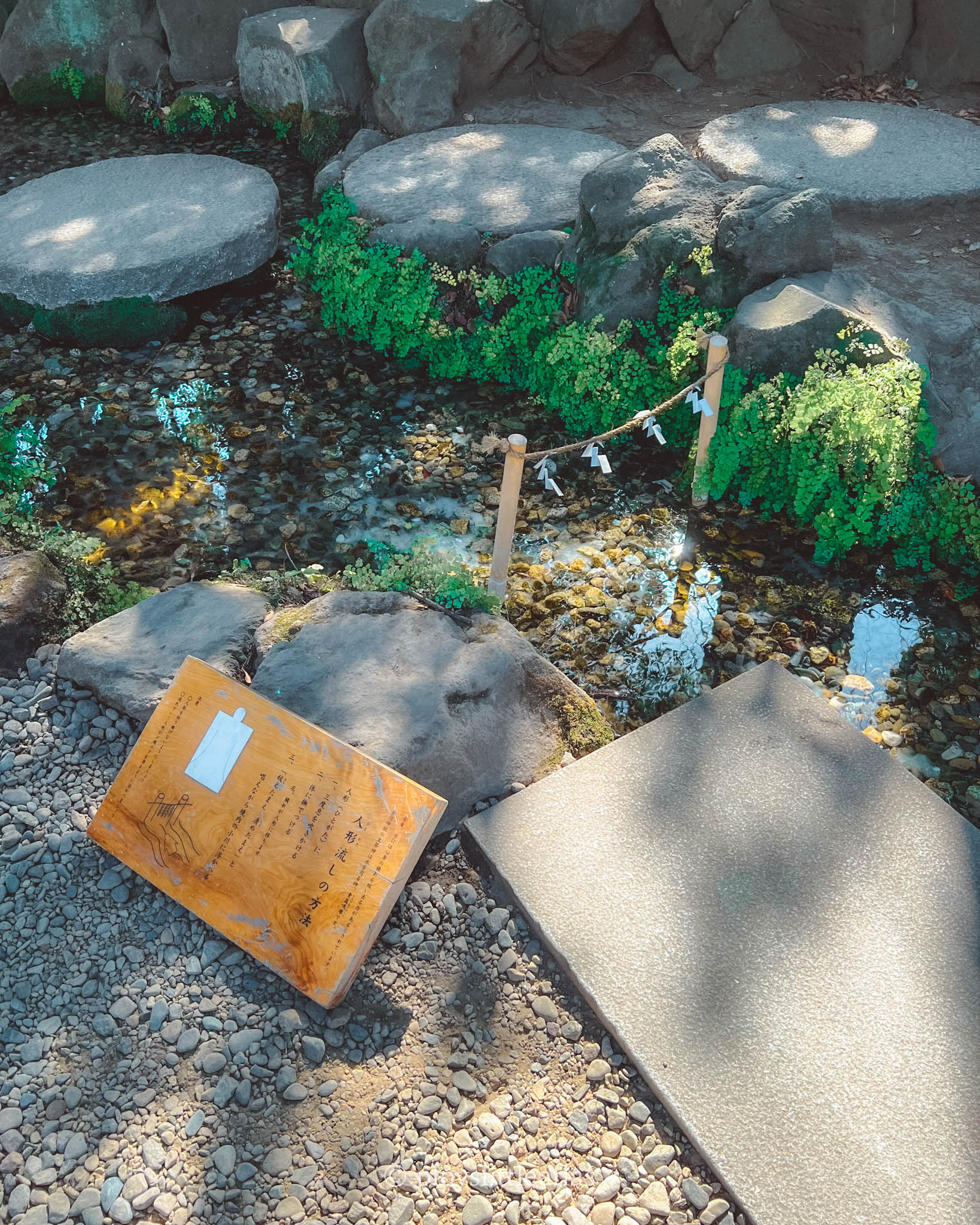
Following the instructions on the wooden plaque nearby, you breathe on the paper and touch it to your body to transfer your physical impurities or “misfortune” to the paper. You then gently place it in the stream and watch it float through the small rope gate (shimenawa). Seeing the paper dissolve as it drifts away is a strangely peaceful way to start the new year.
The Tunnel of Dreams
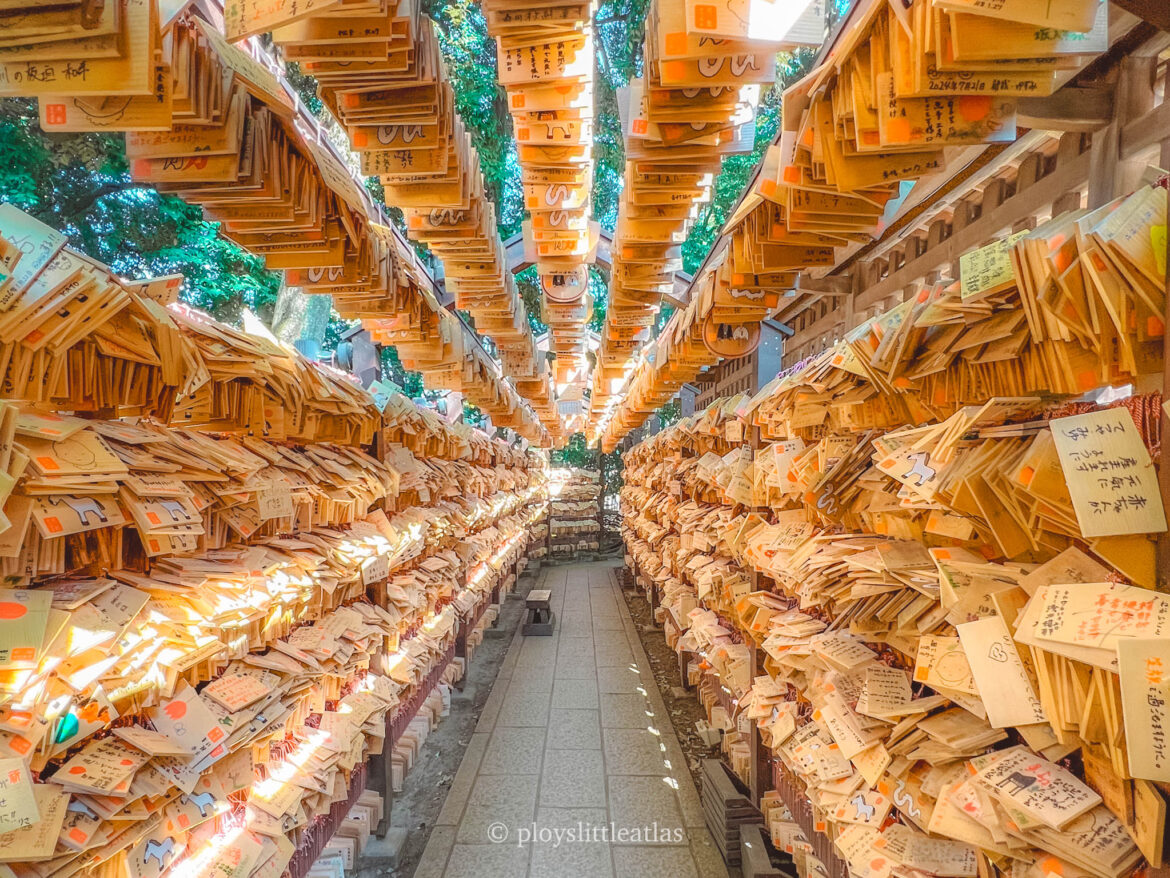
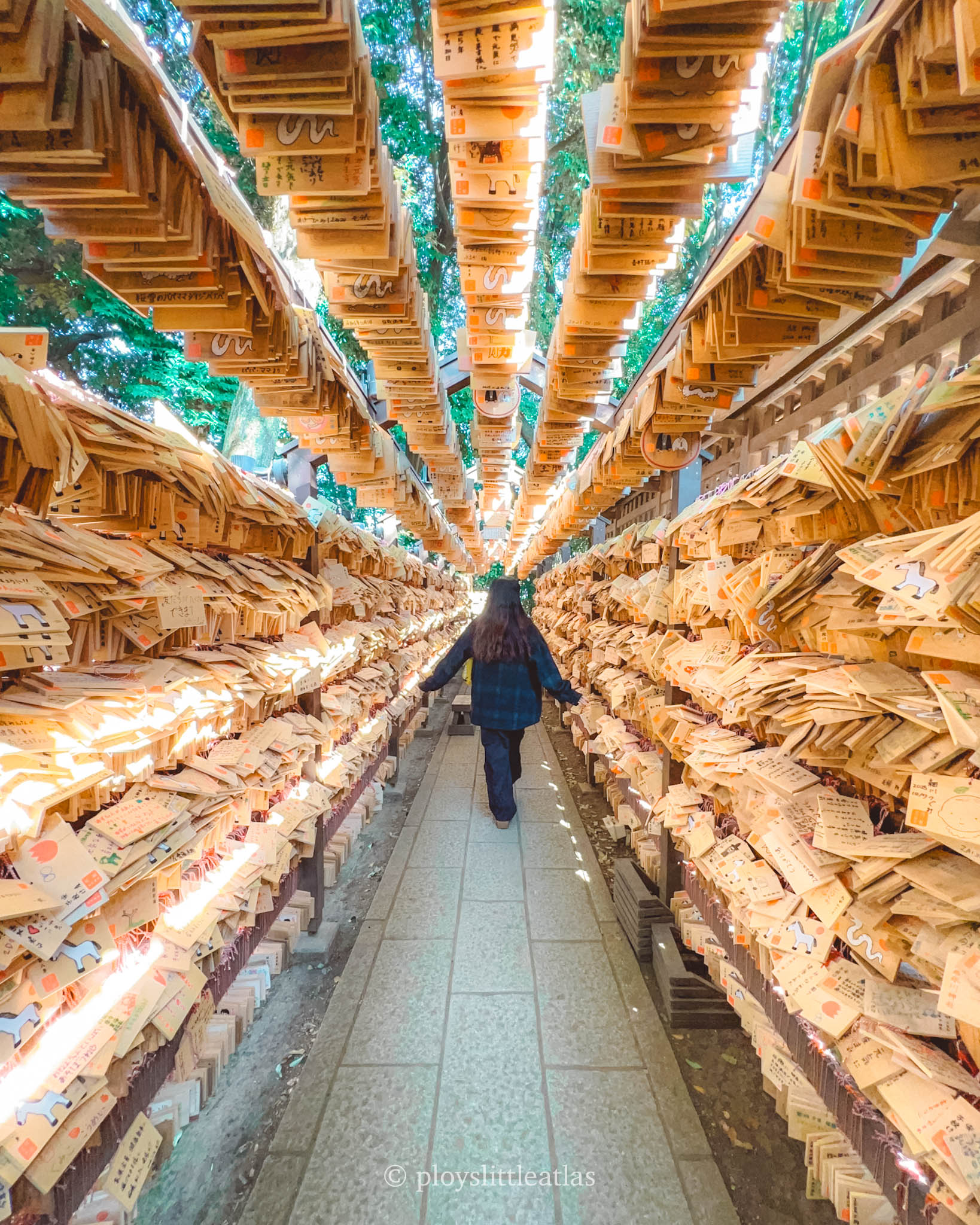
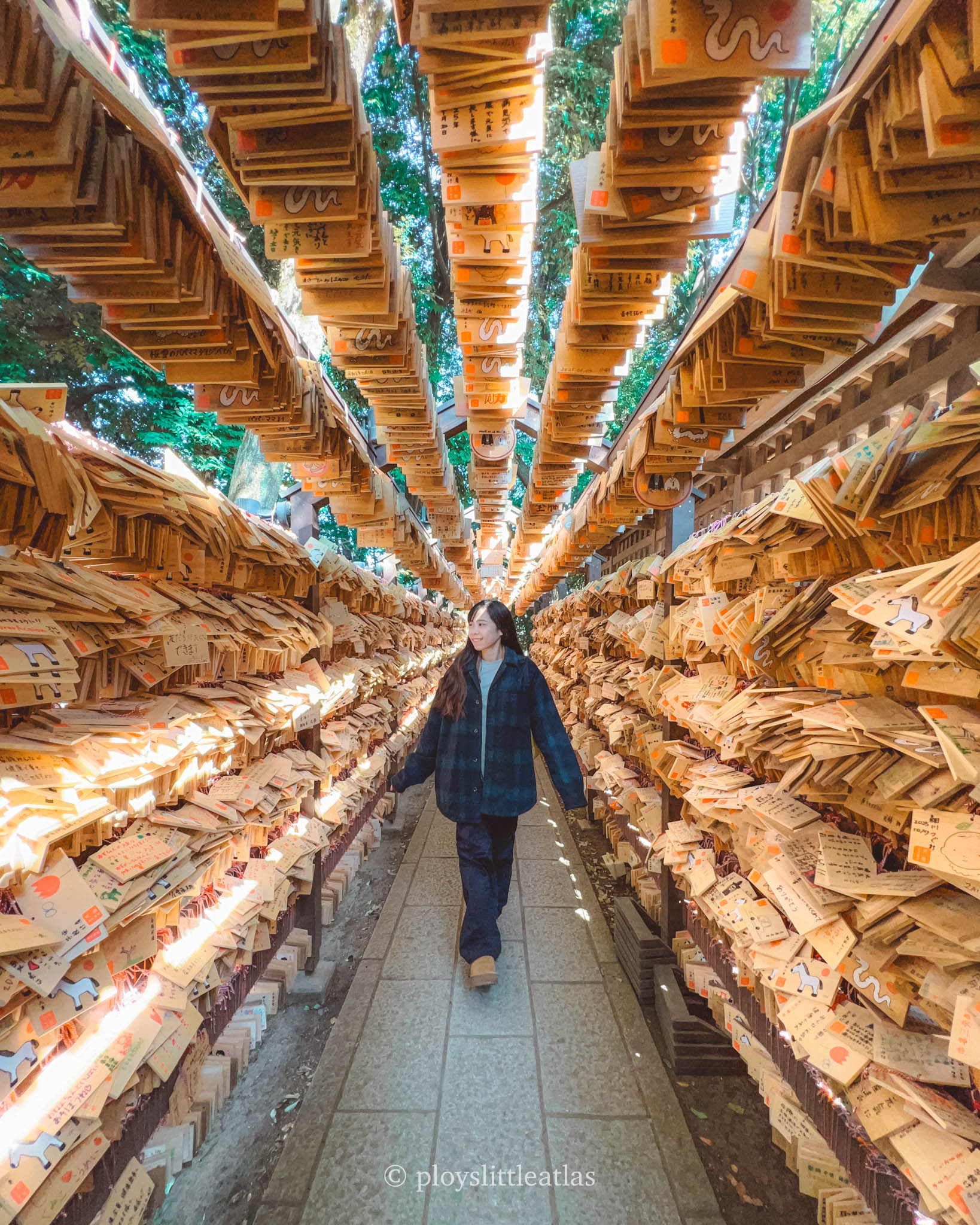
One of my favorite spots for photos was the Ema Tunnel. It’s a long walkway arched over with thousands of wooden prayer plaques. Even in winter, the natural wood creates a warm, golden glow. Walking through it, you can’t help but feel the collective energy of everyone who has visited before you, hanging their hopes on the walls.
The 600-Year-Old Giants
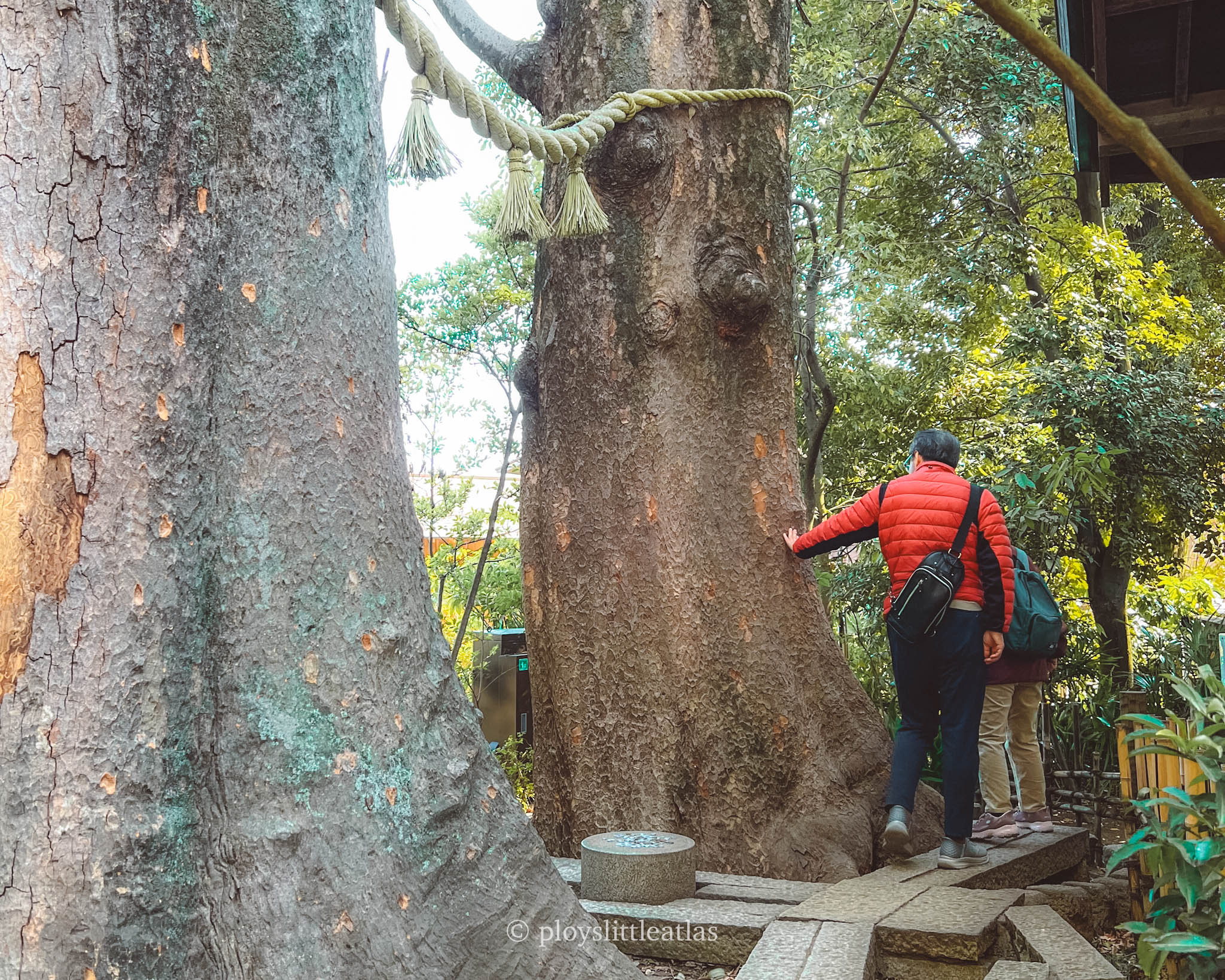
Before leaving, many visitors spend time at the Goshinboku—two massive, 600-year-old sacred cedar trees located behind the main hall. There is a stone path laid out in a figure-eight pattern around the trees; walking this path is said to grant you the strength and longevity of the ancient cedars. Touching the rough, weathered bark, you can truly feel the weight of the centuries.
Why Visit in February?
If you’re wondering if it’s worth the trip in the “off-season,” here is what to expect:
The Light: The winter sun in Saitama is incredibly bright and clear. It’s perfect for photography, especially with the shadows in the Ema Tunnel.
The Crowds: It’s much quieter than the peak festival seasons. You can actually hear the wind in the trees and the water in the stream.
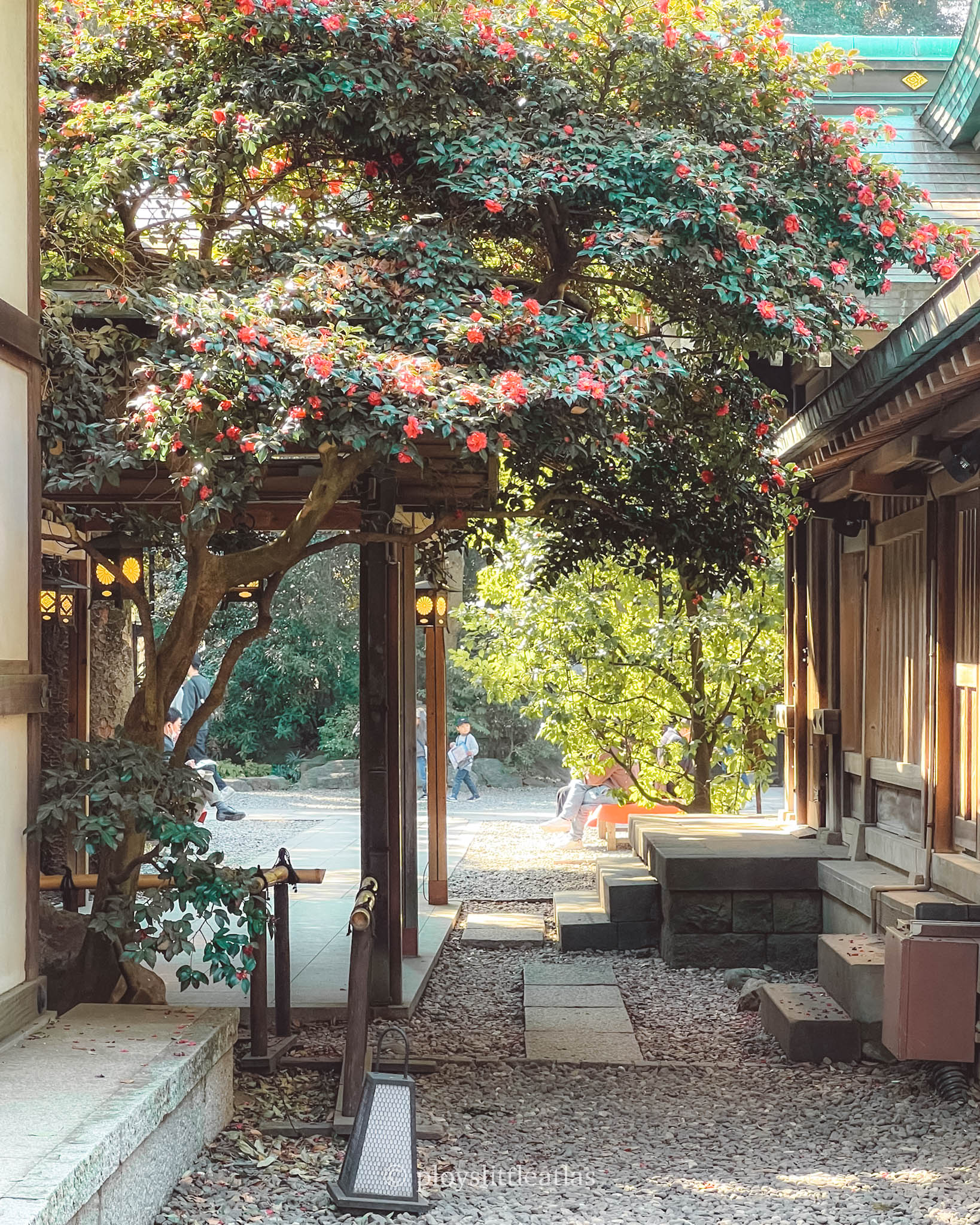
The Flowers: Keep an eye out for the Camellia trees! We saw some beautiful deep pink blooms that added a much-needed pop of color to the winter landscape.
☕ Rest Stops & Caffeine Fixes
If you need a quick break, head over to 神社広場 (Jinja Hiroba) Park, located just near the shrine’s small side entrance (right by the lucky charm selling office).
Facilities: This is the most convenient spot to find clean restrooms if you’re planning to spend an hour or two exploring.
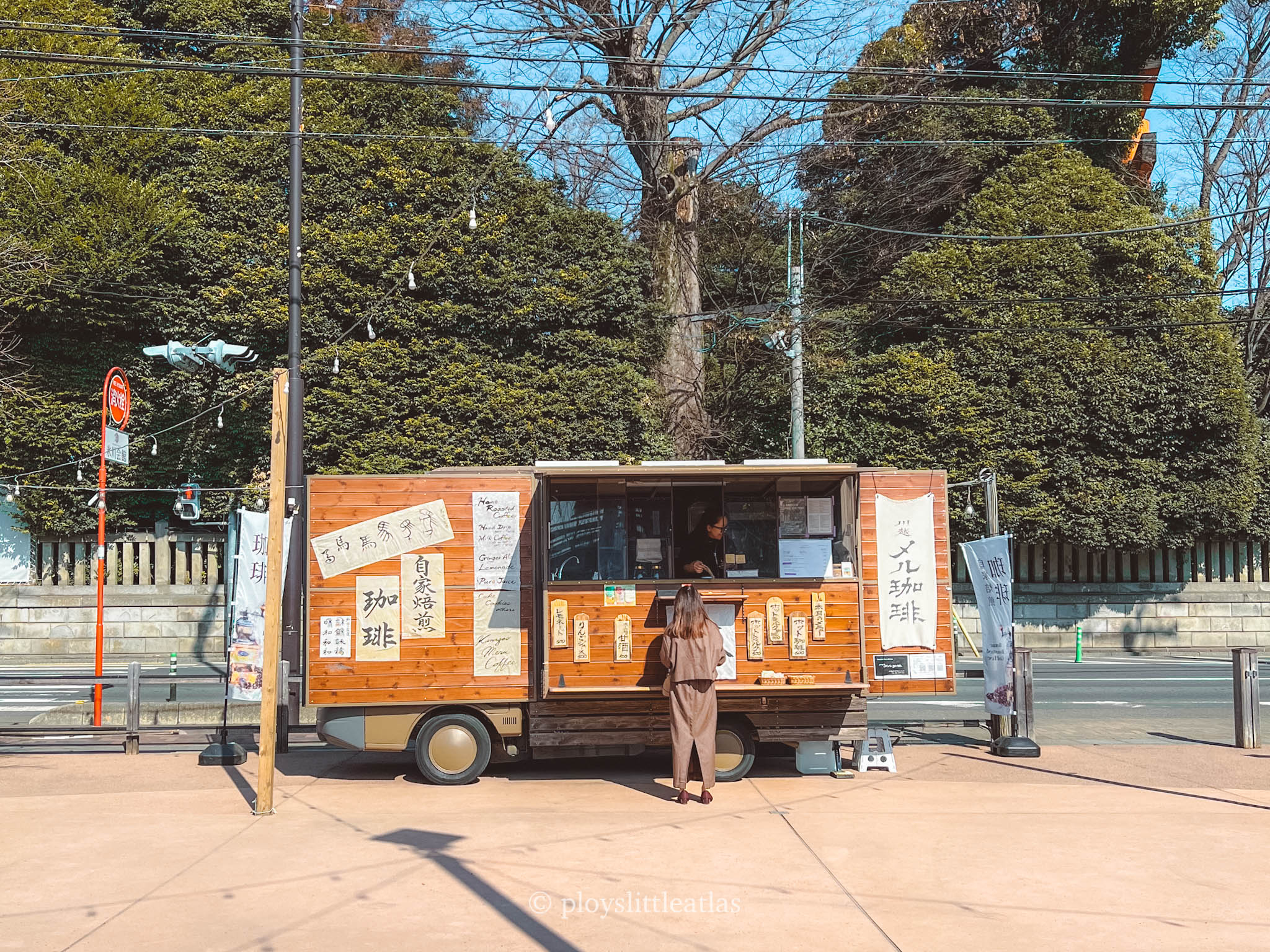
The Coffee Truck: There is a super cute coffee truck parked right there. The barista owner is incredibly friendly and serves a truly lovely cup of joe—the perfect way to warm up your hands on a chilly February morning!
📝 A Quick Traveler’s Checklist
- Best Time: Arrive before 10:00 AM to beat the crowds and enjoy the soft morning light for photography.
- Bring Coins: Entry is free, but most rituals (fishing, purification papers) cost between 300 and 500 yen.
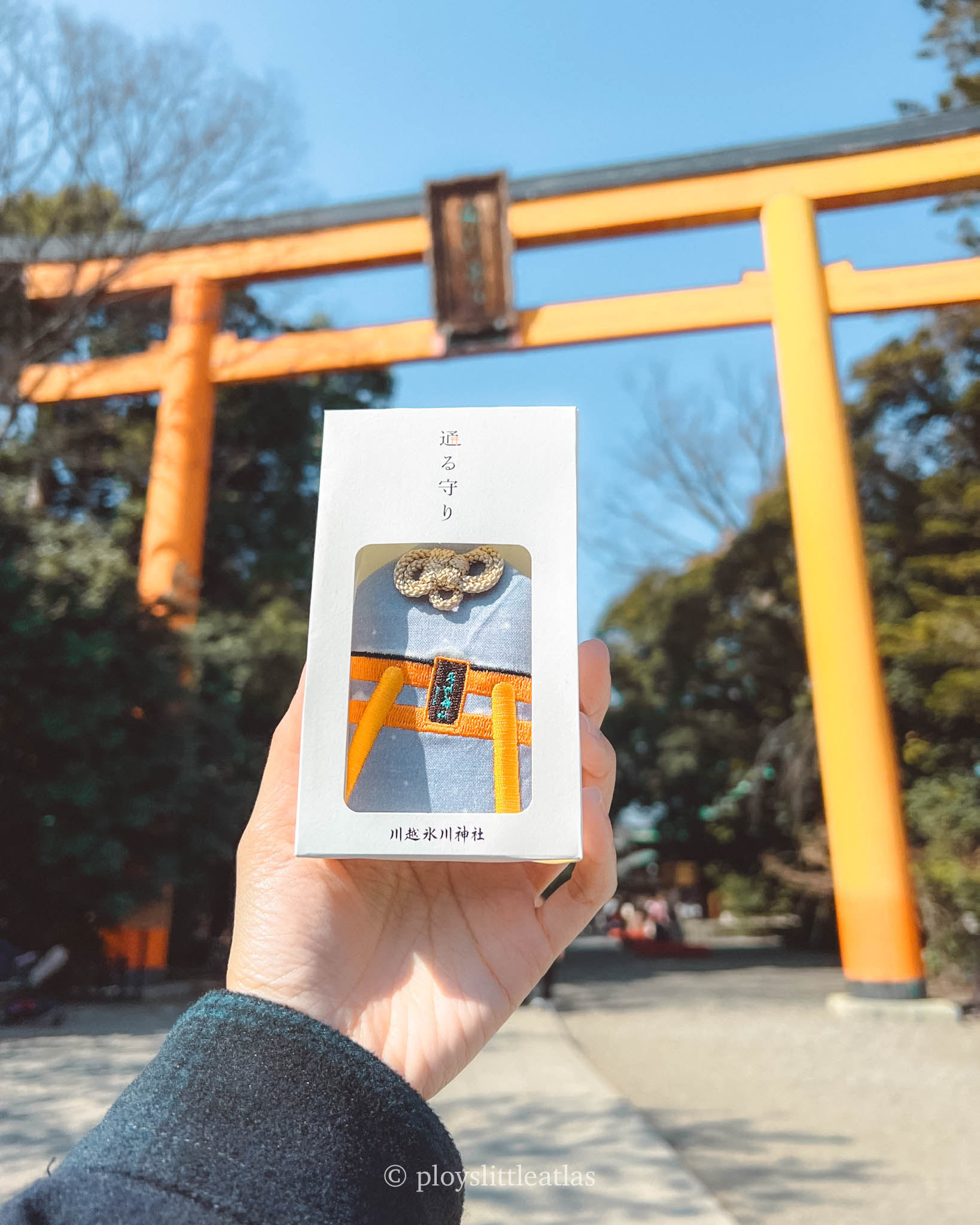
- Lucky Charms: Don’t miss the Omamori shop. Their “Pass Guarantees” and relationship charms are beautifully designed and unique to this shrine.
- Dress Warm: The shrine is mostly outdoors and tucked away in a quiet neighborhood, so it can get chilly in the winter.
- Check the Treats: Don’t forget to grab a warm snack in the nearby “Candy Alley” (Kashiya Yokocho) after your visit!
🚗 Travel Tip: Where to Park
If you are visiting by car like we did, parking can be a bit tricky in the narrow streets of Kawagoe. I highly recommend using the parking lot located near the rear gate, just across the Shingashi River.
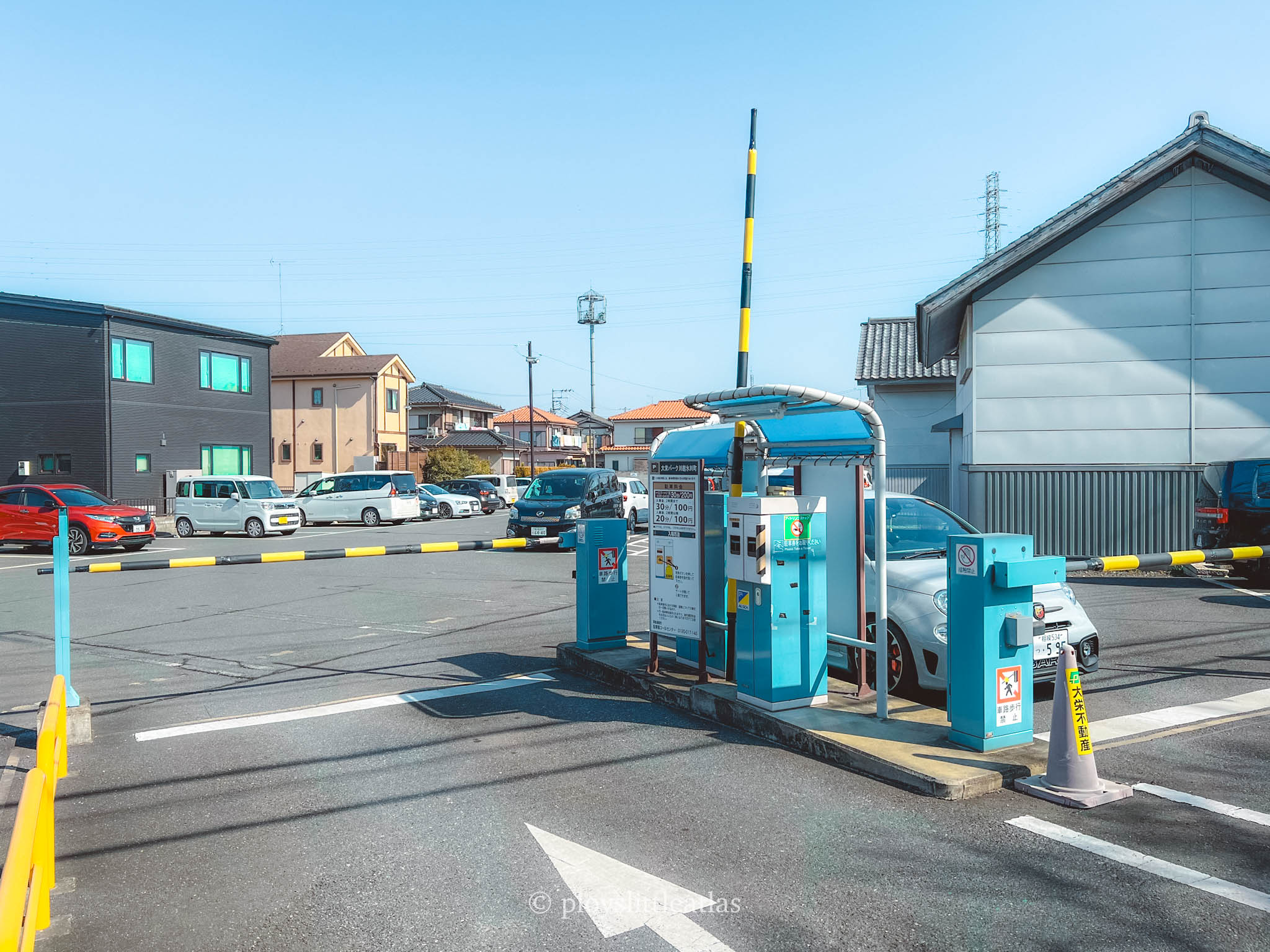
It’s much more spacious than the tiny lots closer to the main entrance and very affordable at only 100 yen per 30 minutes. It’s just a short, scenic walk across the water to get into the shrine grounds.
Final Verdict: Is Kawagoe Hikawa Shrine Worth a Winter Visit?
If you find yourself on a road trip through Saitama in February, Kawagoe Hikawa Shrine is an absolute must-stop. While many visitors wait for the summer wind chimes, there is something incredibly special about the quiet, crisp atmosphere of a winter morning here. It manages to strike that rare balance between being a deeply spiritual site and a place that is genuinely fun and interactive. Between the playful “fishing” for fortunes and the peaceful reset of the purification stream, we left feeling both refreshed and a little bit luckier. It’s a beautiful, manageable detour that offers a much-needed moment of zen before heading back onto the highway.
Access Map
Did this entry help you? Or Did you enjoy my photos? Help support my small blog by giving a little cup of joe. I am always grateful when readers reach out wanting to support 🙂
p.s. This post is independently created. However, when you book or purchase something through the retail links, I may earn an affiliate commission to help keep Ploy’s Little Atlas running. Thank you very much for your support!
p.p.s All images used (unless specified) are owned by the author of the blog and permission is required for a repost. Please, reach out via social media channels to ask beforehand if you’d like to use them.