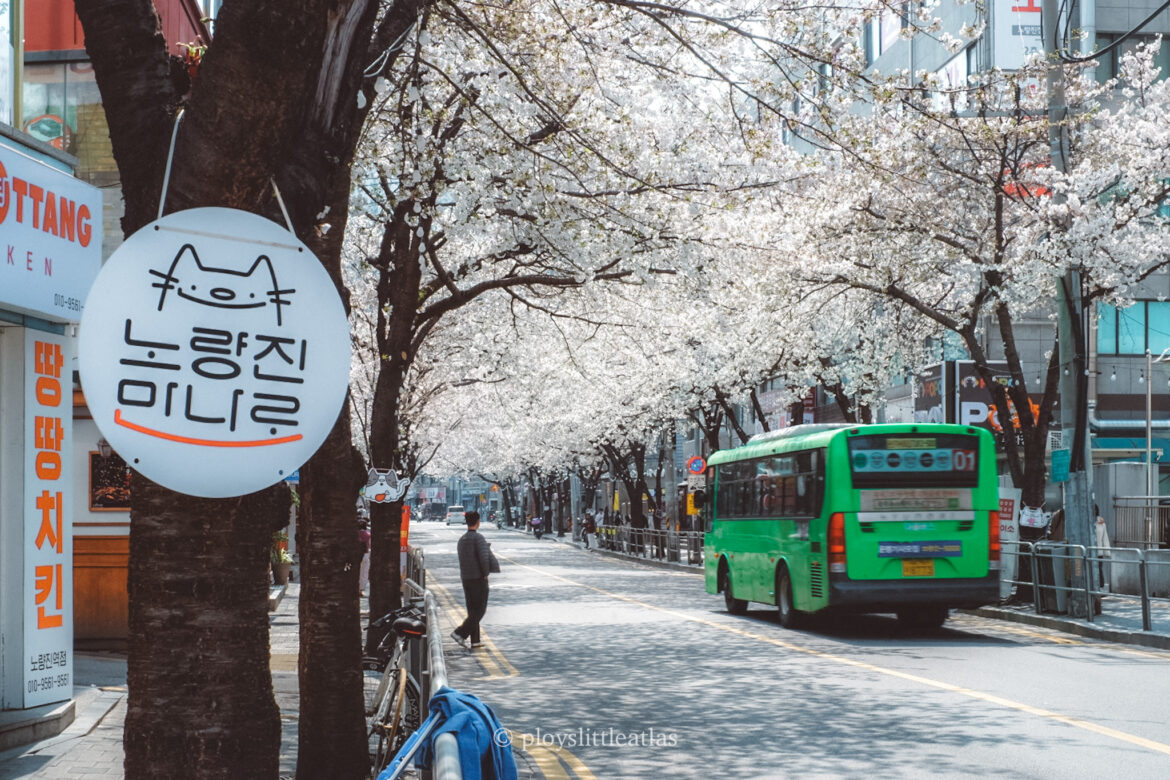
When most people think of Noryangjin Station, their minds immediately drift to the briny scent of the famous Fisheries Wholesale Market or the sight of students hustling between cram schools. It’s a place known for grit, great seafood, and hard work—not necessarily “romance.”
But if you step away from the market and head toward the hills, you’ll find a hidden gem that deserves a top spot on your Seoul spring itinerary: Manyang-ro (만양로). Today, I’m taking you to a prettier nook of Noryangjin that most tourists (and even some locals!) completely overlook.
Discovering Manyang-ro (만양로)
Before we get to the flowers, let’s talk about the road itself. Manyang-ro is a 1.15km stretch that begins near the Sangdo Nobility apartments and winds its way down to the Noryangjin-ro main road.
The name “Manyang” actually comes from Manyang-gogae, a hill so famously steep and long that travelers in the old days used to say the crossing went on “forever” (manyang in Korean). Today, that rugged terrain makes for a unique urban landscape. While the local neighborhood buses (Dongjak 01 and 13) are usually packed to the gills with commuters tackling the incline, the street takes on a magical, slow-paced energy once spring arrives.
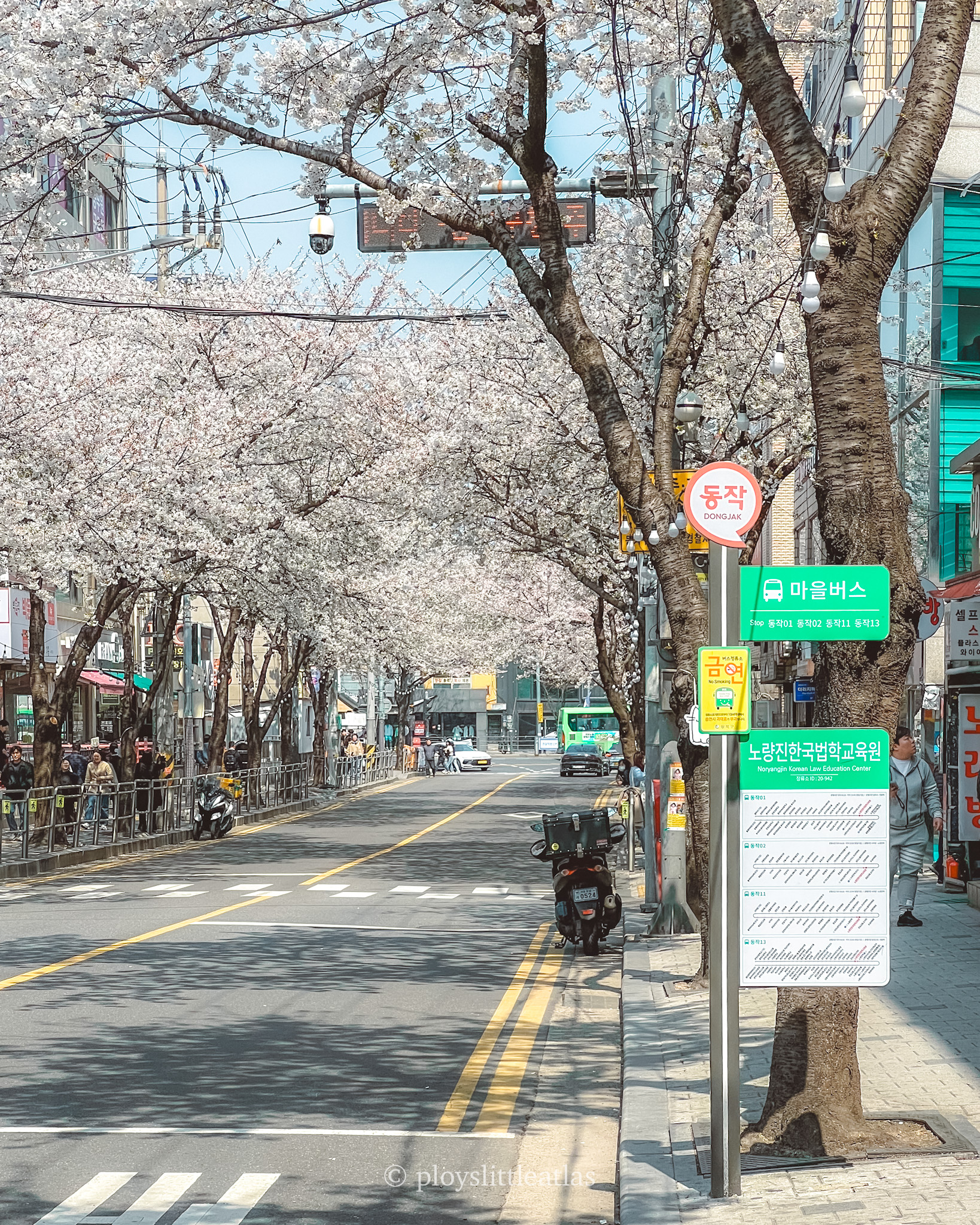
The “Cherry Blossom Goldmine”
If you’re coming from Noryangjin Station (Exit 3), you’re just a short walk away from the most scenic section of the street.
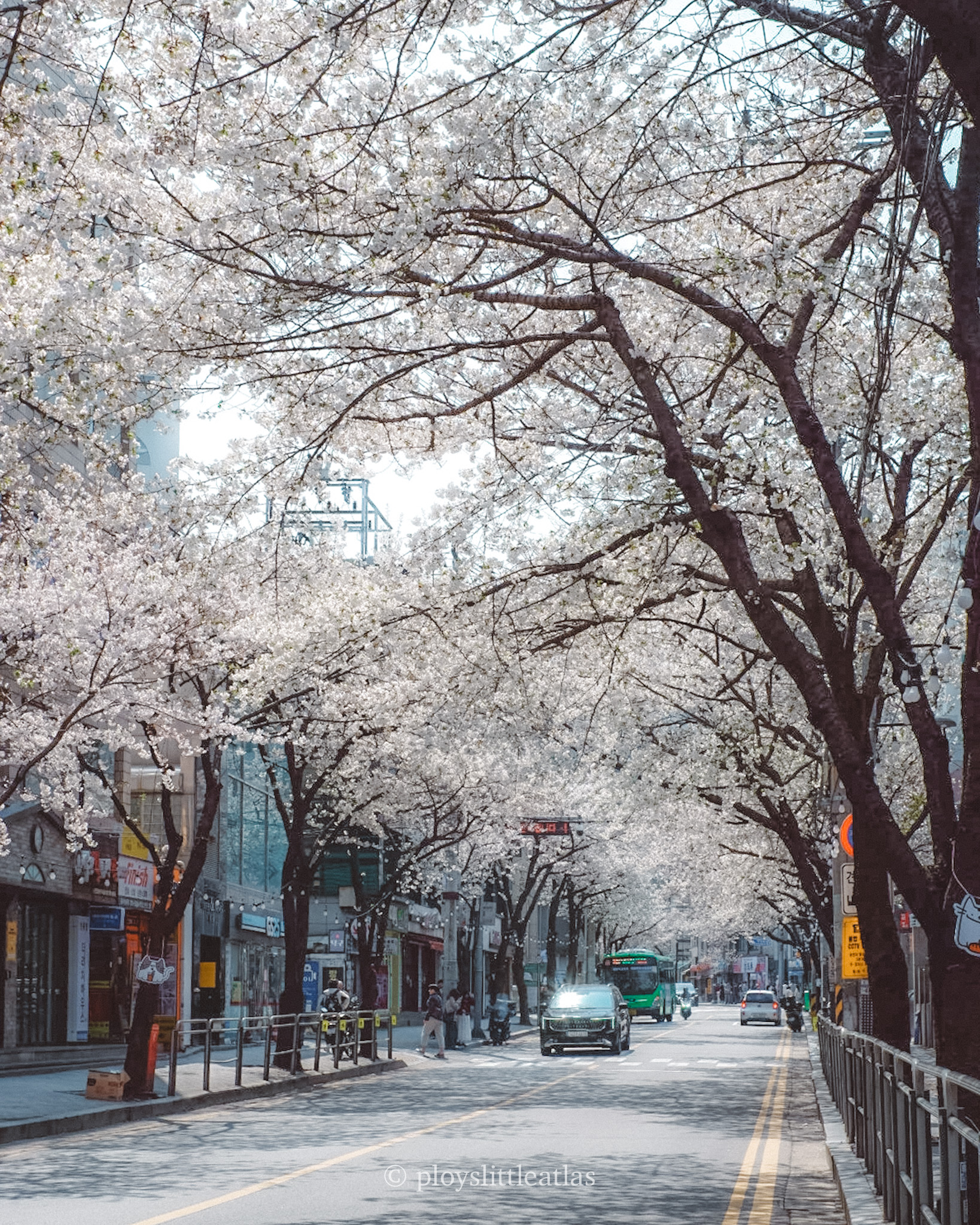
The prime viewing area stretches from the Yukjeon Gukbab (육전국밥) joint all the way up to Gangnam Church (강남교회). This specific corridor is flanked by mature, grand Yoshino cherry blossom trees. Because the trees are well-established, their branches reach out across the road, creating a breathtaking “flower tunnel” effect that feels miles away from the busy Seoul traffic.
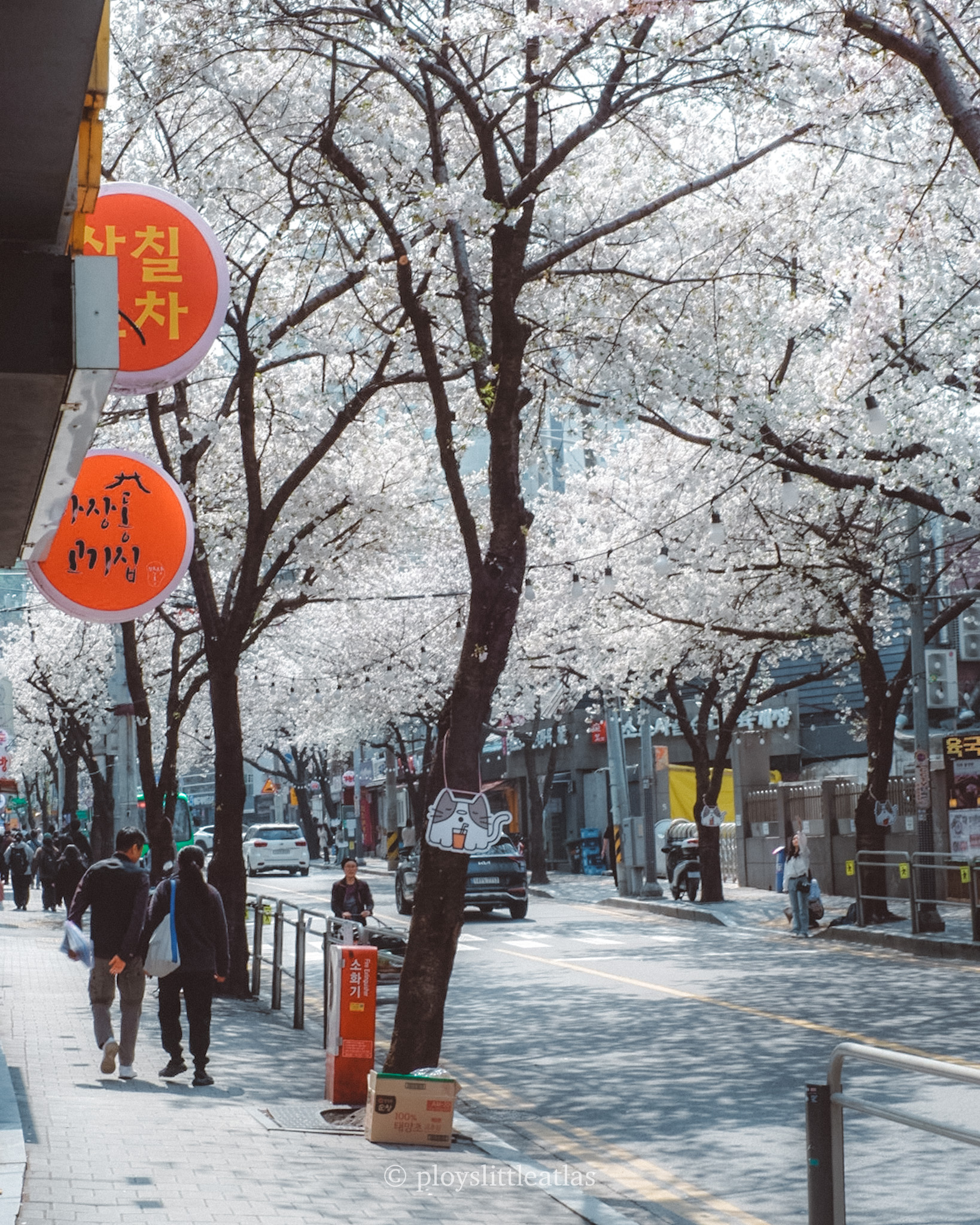
Why Visit Noryangjin in the Spring?
There is something uniquely poetic about Manyang-ro in full bloom. Unlike the massive crowds at Yeouido’s Han River Park, where you’re often shoulder-to-shoulder with thousands of others, Manyang-ro offers a more intimate, “neighborhood” vibe.
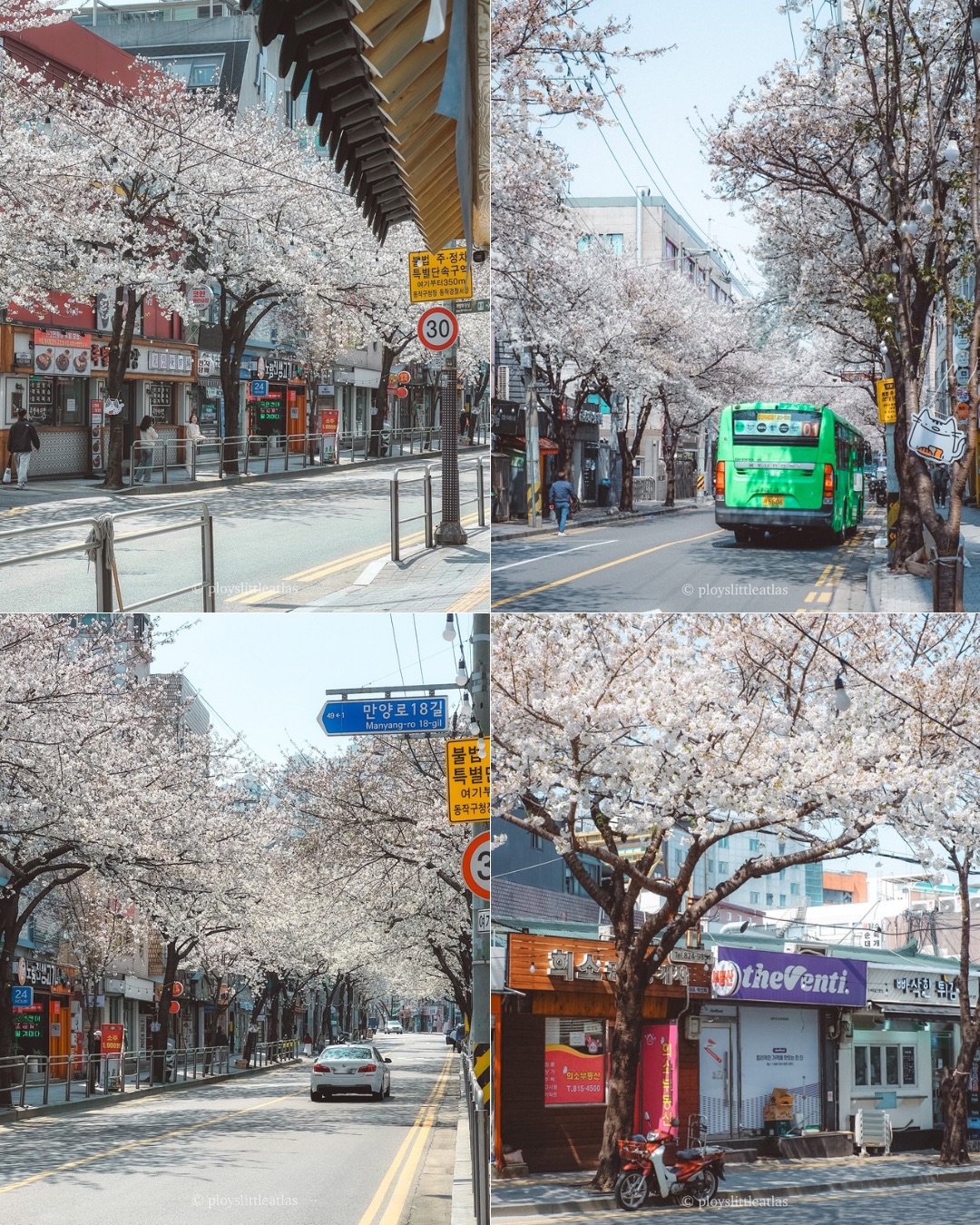
When these trees reach their peak, the petals fall like snow against the backdrop of Noryangjin’s red-brick buildings and bustling alleyways. It’s a perfect blend of Seoul’s raw, everyday life and the fleeting, ethereal beauty of nature. The contrast of the steep hill framed by soft pink blossoms makes for some of the most dramatic photo ops in the city.
Timing Your Visit
In Seoul, cherry blossoms typically hit full bloom between late March and early April. However, nature doesn’t always follow a calendar!
- Peak Window: Aim for the first to second week of April.
- Reference Point: The photos in this post were captured on April 7th, when the trees were at a glorious 100% bloom.
- Planning Tip: I recommend checking the annual KMA (Korea Meteorological Administration) bloom forecasts starting in early March to pinpoint your specific window.
Pro Tips for the Perfect Visit
If you want the ultimate Manyang-ro experience, visit during dinner time. While the flowers are stunning by day, the street truly comes alive after dark. Manyang-ro is home to a growing scene of hipster bars and trendy restaurants that primarily operate in the evening. There is nothing quite like enjoying a meal or a drink under the glow of streetlights reflecting off the white blossoms. The “night cherry blossoms” (bam-beotkkot) here offer a moody, cinematic atmosphere that you won’t soon forget.
Final Verdict
Noryangjin is so much more than just a seafood destination. Manyang-ro proves that even in the most functional parts of the city, beauty is waiting to be found if you’re willing to walk uphill a little! Whether you’re a photographer looking for the perfect shot or a foodie wanting a side of scenery with your dinner, this street is a spring essential.
Access Map
Other Seoul Spring Posts You Might Like
- 23 Best Places to Enjoy Cherry Blossoms in Seoul
- The Ultimate Guide to Plum Blossom Viewing Spots
- The Best Magnolia Viewing Spots in Seoul
Did this entry help you? Or Did you enjoy my photos? Help support my small blog by giving a little cup of joe. I am always grateful when readers reach out wanting to support 🙂
p.s. This post is independently created. However, when you book or purchase something through the retail links, I may earn an affiliate commission to help keep Ploy’s Little Atlas running. Thank you very much for your support!
p.p.s All images used (unless specified) are owned by the author of the blog and permission is required for a repost. Please, reach out via social media channels to ask beforehand if you’d like to use them.