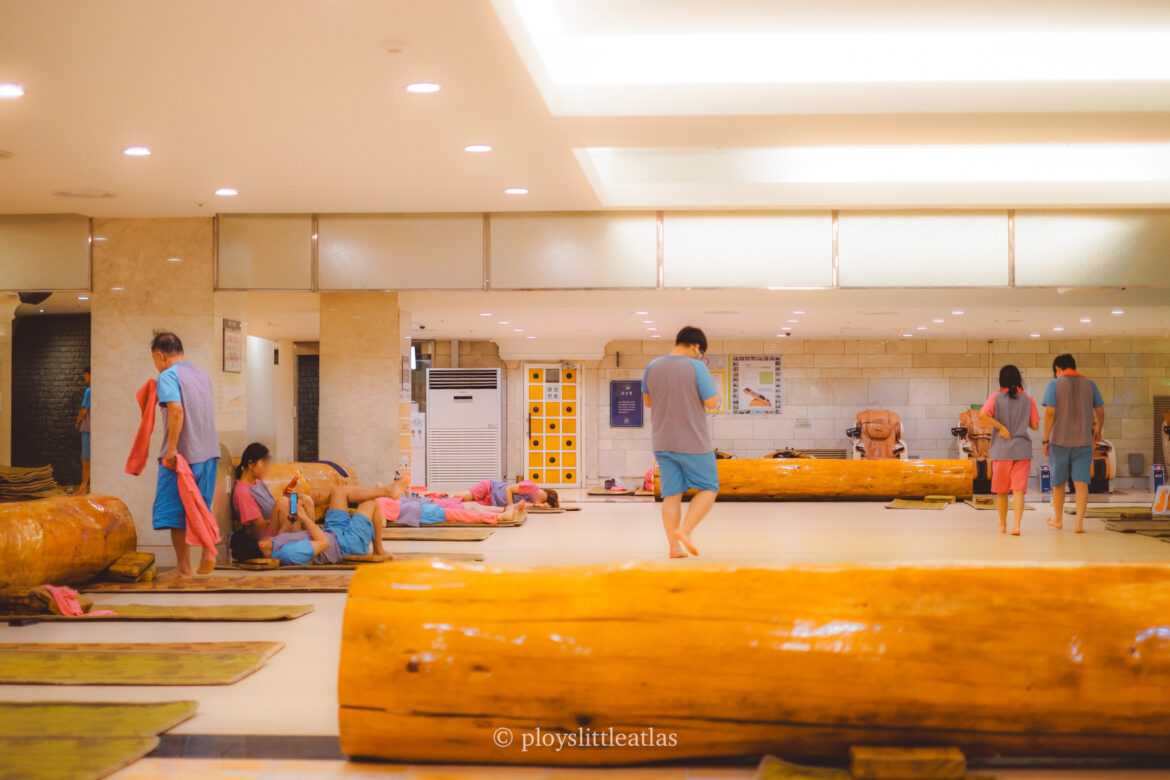
If you’ve ever watched a Korean drama, you’ve seen the scene: friends sitting together with towels folded like sheep horns on their heads, cracking hard-boiled eggs, and sipping sweet rice punch. That quintessential experience takes place in a jjimjilbang (찜질방) —a traditional Korean bathhouse that’s so much more than just a place to get clean.
Jjimjilbangs are 24-hour wellness complexes where Koreans go to relax, socialize, detox, eat, sleep, and escape from daily stress . They’re affordable, welcoming to foreigners, and offer one of the most authentic cultural experiences you can have in Korea. Whether you’re traveling to Seoul, Busan, or anywhere in between, visiting a jjimjilbang should be on your itinerary.
This comprehensive guide will walk you through everything you need to know—from the moment you walk in to the moment you leave—so you can enjoy your first jjimjilbang experience with confidence.
What Exactly Is a Jjimjilbang?
The word jjimjilbang translates literally to “heated room” . Unlike a traditional Western sauna, which typically consists of a single heated room, a jjimjilbang is a massive facility that combines:
- Gender-separated bathing areas with hot tubs, cold plunges, and shower stations
- Communal heated rooms with different themes and therapeutic properties
- Sleeping areas for napping or overnight stays
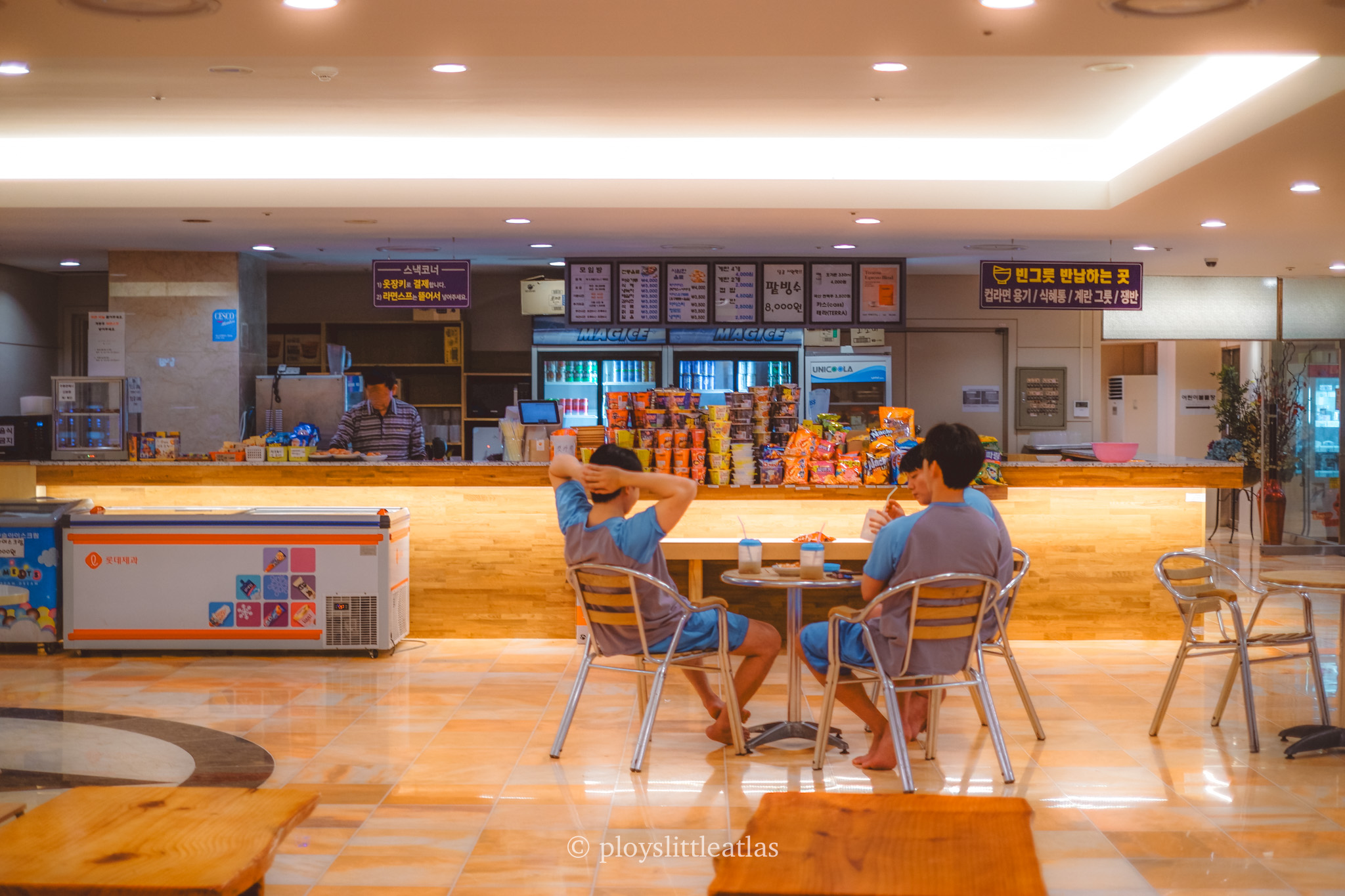
- Snack bars and restaurants serving Korean favorites
- Entertainment zones with massage chairs, karaoke, arcade games, and even movie theaters
- Fitness centers and swimming pools at premium locations
Think of it as a cross between a spa, a community center, and a place to crash for the night—all under one roof . Most jjimjilbangs operate 24 hours a day, making them incredibly convenient for travelers needing a place to rest after a late flight or for locals looking to unwind after work.
Step-by-Step: Your First Jjimjilbang Visit
Step 1: Paying for Admission
In modern Korean spas, the traditional ticket counter is often replaced by automated systems. Many jjimjilbangs now sell their admission tickets through a self-service kiosk, making the check-in process quick and efficient. Here is how to navigate the machine:
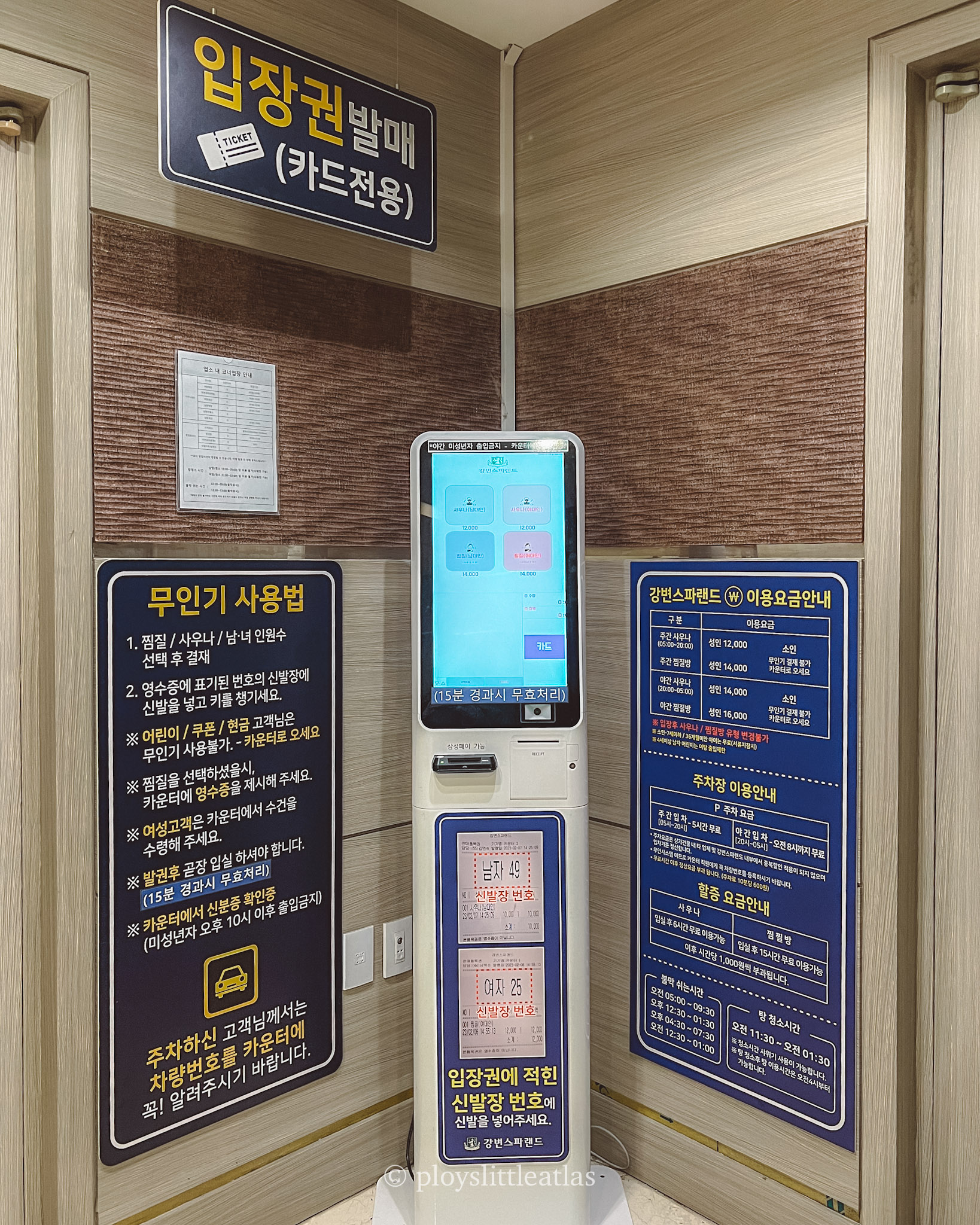
Upon approaching the kiosk, you will see options divided by service and gender. First, decide if you want the Sauna (사우나)—which is just the baths—or the full Jjimjil (찜질) experience that includes the common lounge and uniform. Once you’ve decided, select the button that corresponds to your gender: blue for male (남) and pink or purple for female (여). After selecting your ticket, tap the 카드 (Card) button at the bottom and insert your credit or debit card into the reader. The kiosk will then print a small receipt or ticket with a number on it; it is vital to keep this paper, as that number tells you exactly which shoe locker is yours and activates your electronic wristband for the rest of your stay.
Entrance Fees:
Prices are generally split into two categories based on the level of access you want:
- Sauna-Only (Bathhouse): Typically 12,000 KRW. This grants you access to the locker rooms and the gender-segregated bathing areas (hot/cold tubs and steam rooms).
- Jjimjil (Full Experience): Typically 14,000 KRW. For just a few extra dollars, you receive your rental uniform (pajamas) and access to the shared heated lounges, themed salt/charcoal rooms, and snack areas.
Note: These rates are standard for a mid-range, traditional jjimjilbang.
Step 2: Entry
When you first enter a jjimjilbang, you’ll immediately notice the shoe lockers near the entrance. Remove your shoes and store them in a designated locker—this is a crucial part of Korean etiquette, keeping the indoor spaces clean and sacred.
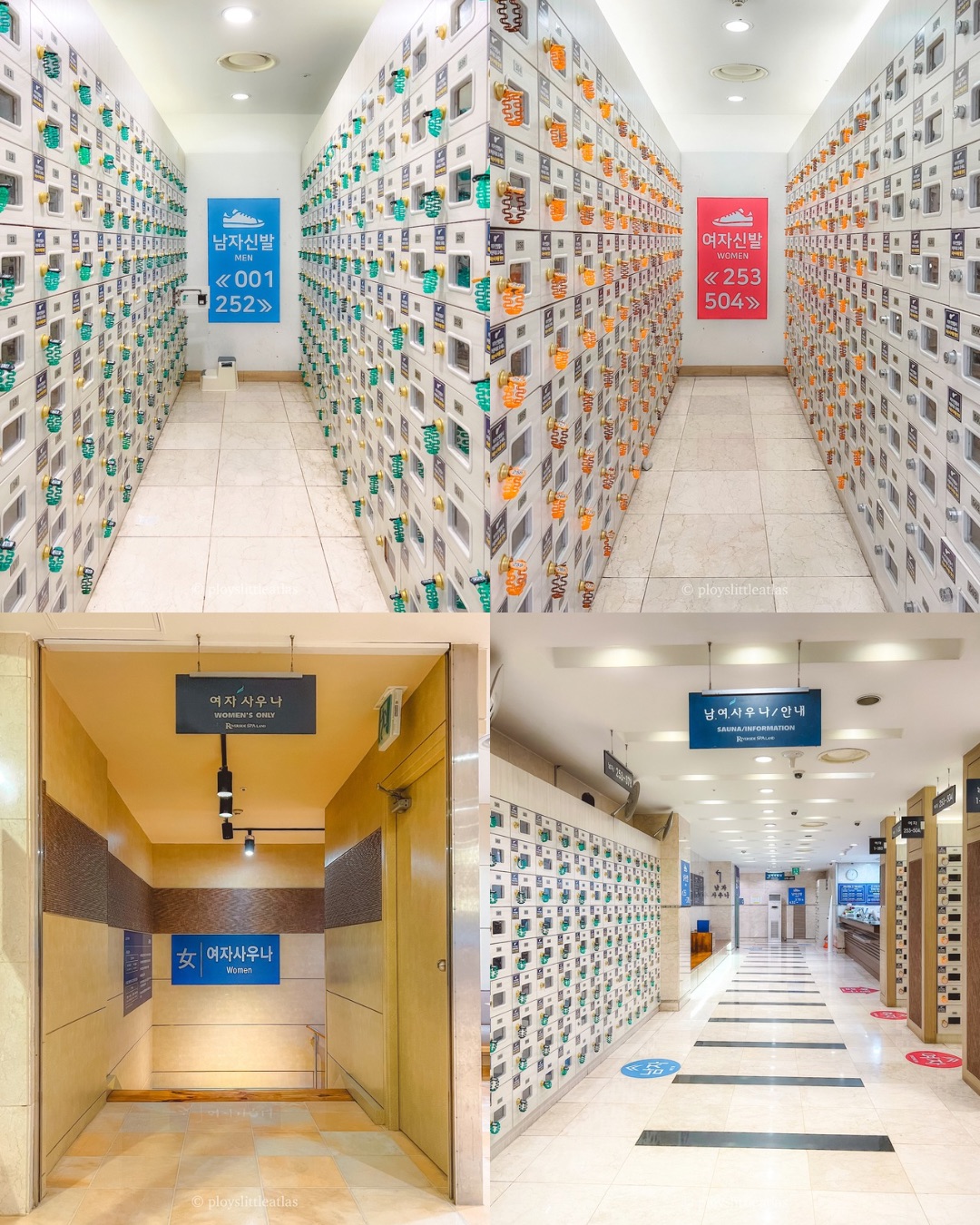
Proceed to the front desk where you’ll receive:
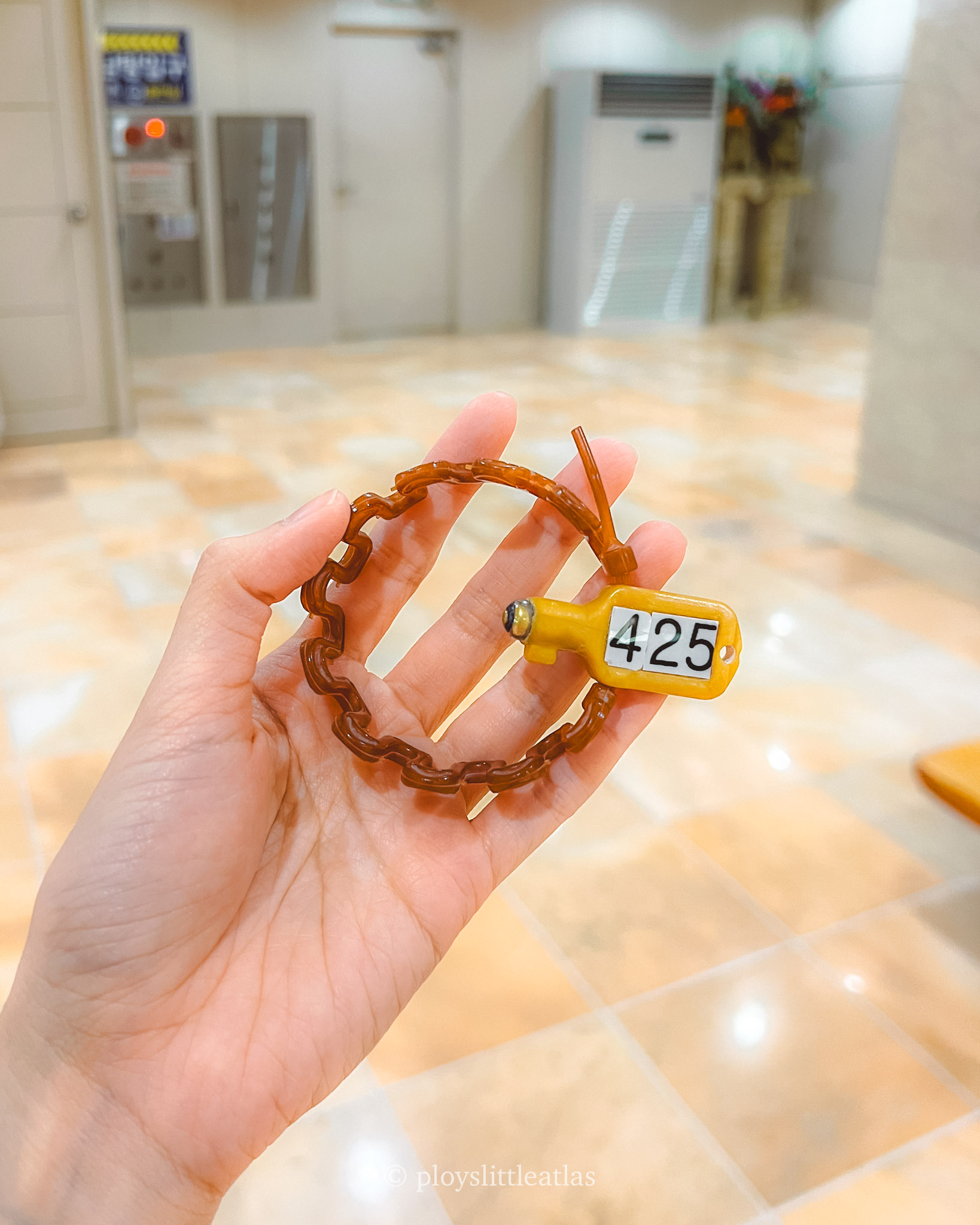
- A wristband or locker key (often with a barcode for purchases)
- A set of jjimjilbang clothes—typically a loose-fitting cotton t-shirt and shorts
- A small towel (don’t expect a large bath sheet; these are modestly sized)
Step 3: The Gender-Separated Bath Area
Head to the bigger locker room designated for your gender. Here’s where first-timers often feel the most nervous, but remember: everyone is in the same situation.
Key points for the bath area:
- Undress completely—swimsuits are not allowed. This is strictly enforced and is part of the cultural experience
- Store your belongings in your assigned locker
- Shower thoroughly before entering any tub—use the seated washing stations equipped with soap, shampoo, and often exfoliating mitts
- Tie up long hair to keep it out of the water
The bathing experience:
Once clean, you can enjoy the various baths:
- Hot baths (온천) for relaxation and muscle relief
- Cold plunges for circulation and invigoration
- Bubble baths and jet spas for massage effects
- Herbal or medicinal baths at some facilities
The hot water softens your skin, making it the perfect time for exfoliation. You can scrub yourself using an exfoliating mitt (often available for purchase), or for a truly authentic experience, pay for a body scrub (seshin) performed by an ajumma (older woman) or ajusshi (older man)—you’ll leave with baby-smooth skin you didn’t know you had.
Step 4: Shower and Change
After bathing, take another quick rinse, dry off, and put on your jjimjilbang clothes. You’re now ready to explore the communal areas.
Step 5: The Communal Jjimjilbang Area
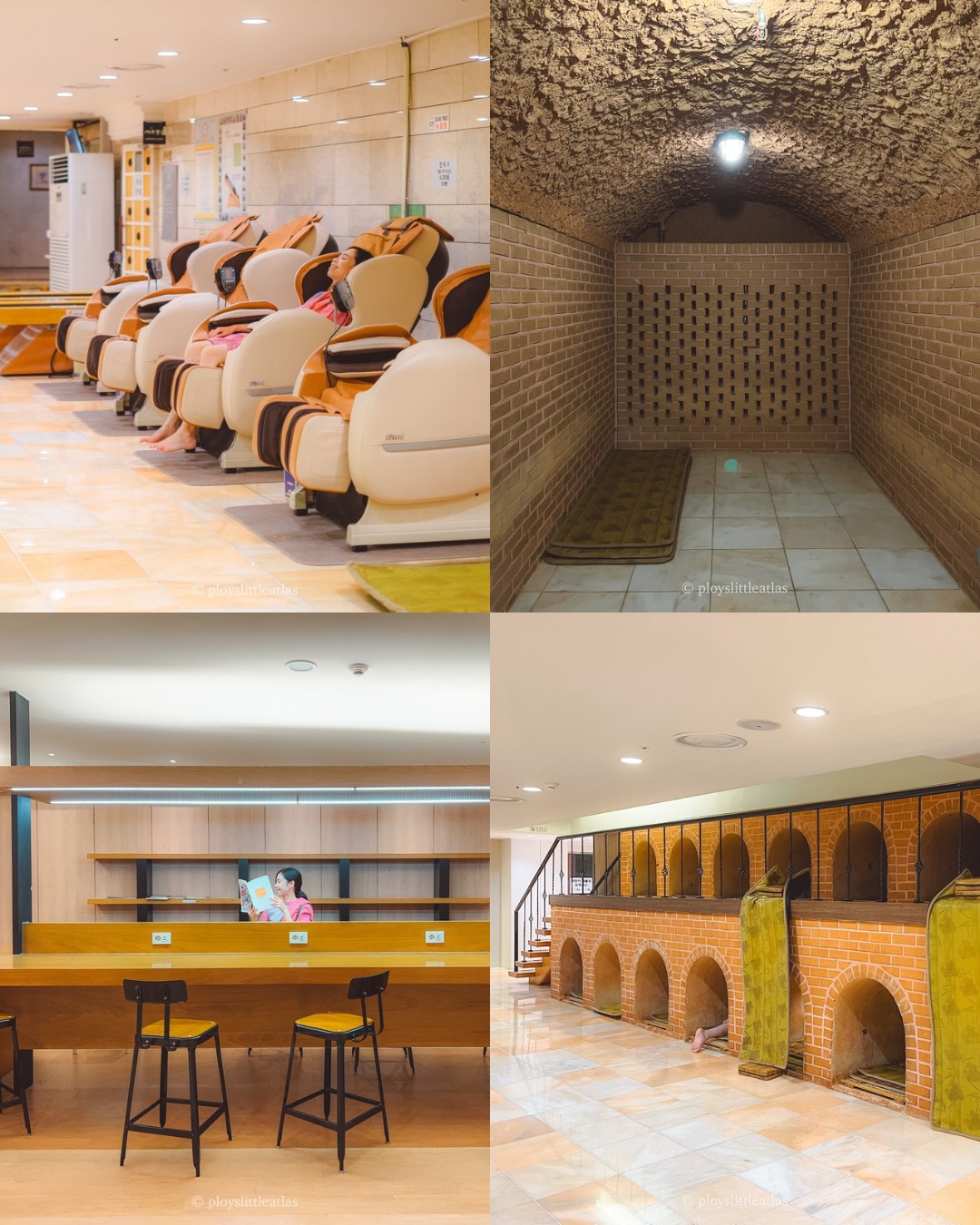
This is the heart of the experience—the coed area where everyone mingles, relaxes, and enjoys the themed rooms. You’ll find:
Themed Heated Rooms (찜질방)
Each room has different therapeutic properties and temperatures:
- Clay rooms (황토방) : Made of yellow soil, these help with detoxification and are typically heated to 40-50°C
- Salt rooms (소금방) : Himalayan salt or sea salt walls support respiratory health and skin healing
- Charcoal rooms (숯방) : Known for absorbing impurities and improving circulation
- Ice rooms (냉방) : A cold respite after the heat—great for closing pores and refreshing the skin
- Jade rooms (옥방) : Jade stones are believed to emit negative ions that reduce stress
- Amethyst rooms : Found in some premium facilities like Puksuwon Spaplex
How to use the heated rooms:
- Start with cooler rooms (30-40°C / 86-104°F) and work your way up
- Stay for 10-15 minutes at a time, then take a break
- If a room exceeds 60°C (140°F), limit your time to about 20 minutes maximum
- Alternate between hot and cold rooms for maximum therapeutic benefit
- Hydrate constantly—drink water or sikhye (sweet rice drink) to replenish fluids
Relaxation and Entertainment
Beyond the heated rooms, modern jjimjilbangs offer:
- Massage chairs (often for a small fee)
- Sleeping areas with mats, pillows, and dim lighting
- TV lounges where people nap or watch shows
- Ondol floors—heated floors perfect for lying down and resting
- PC rooms, karaoke, and arcade zones at larger facilities
- Rooftop pools and foot baths at premium locations like Aquafield Goyang
Step 6: Snack Time
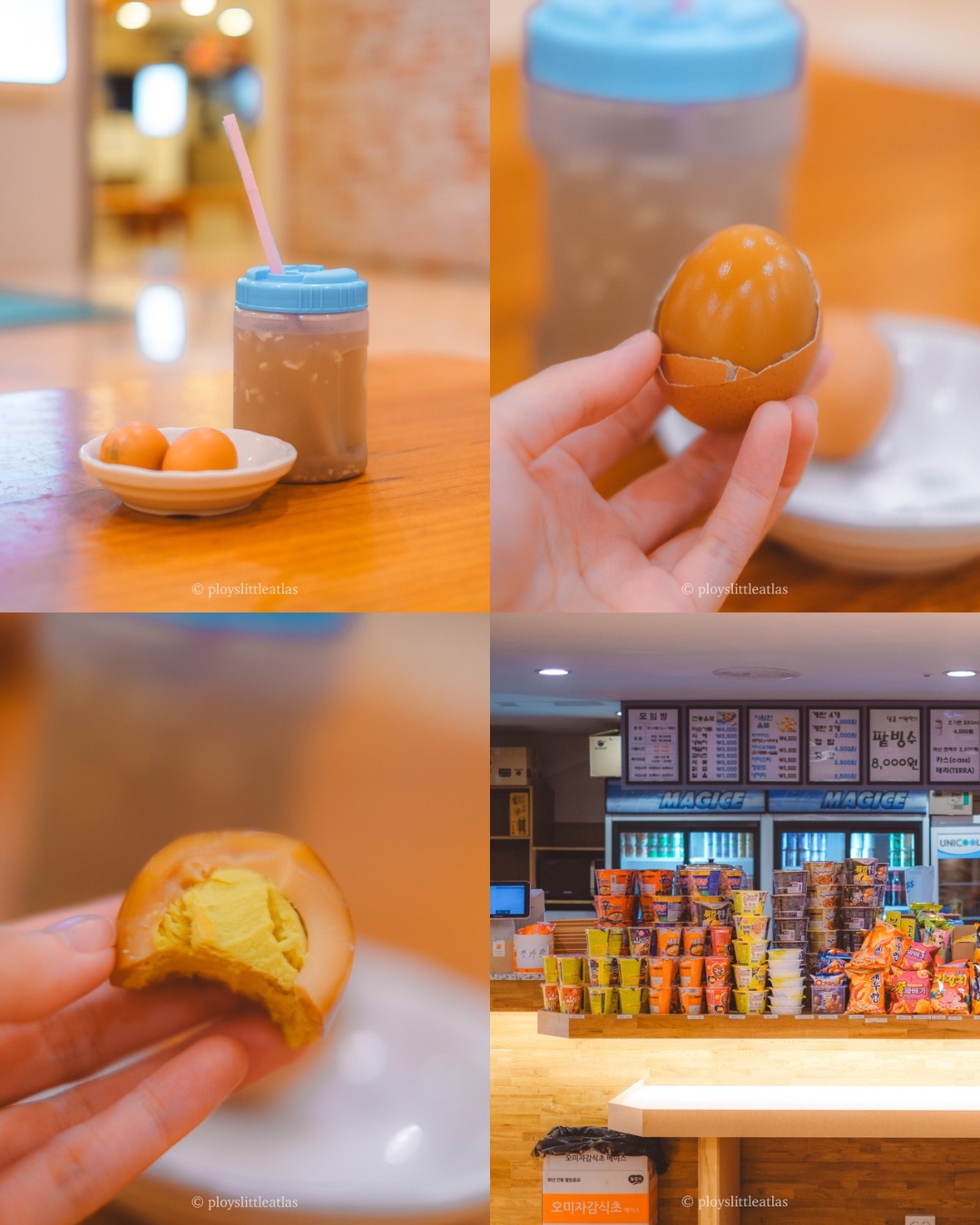
No jjimjilbang experience is complete without food. The snack bar is where you’ll find iconic Korean spa treats:
Step 7: Rest or Sleep Overnight
One of the best features of jjimjilbangs is that you can sleep overnight. Since they’re open 24/7, they serve as affordable accommodations for travelers and a convenient option for locals who miss the last train.
Sleeping etiquette:
- Find a spot in the designated sleeping area or anywhere in the communal lounge
- Grab a mat and pillow (usually provided)
- Keep noise to a minimum—others are sleeping
- Set a silent alarm if you need to wake up at a specific time
- Be aware that snoring is common, so consider earplugs if you’re a light sleeper
Step 8: Exiting and Payment
When you’re ready to leave, simply gather your belongings from the locker. All purchases you made during your visit (snacks, scrubs, extra services) have been tracked via your wristband key. Pay at the front desk when you return your key, then retrieve your shoes and head out.
Essential Etiquette: 12 Rules for a Smooth Experience
Understanding and following jjimjilbang etiquette shows respect for Korean culture and ensures everyone has a pleasant experience.
Bath Area Etiquette
- Shower before entering any pool—this is non-negotiable
- No swimsuits allowed in the gender-separated baths—nudity is mandatory
- No towels in the water—keep them on your head or beside the tub
- No photography or phone use in the bath area
- No splashing, swimming, or loud talking—keep it calm and quiet
- Clean up after scrubbing—rinse away any dead skin cells from your station
Communal Area Etiquette
- Wear your provided jjimjilbang clothes in all communal areas
- Use the small towel for your head or as a seat cover—not for covering your body
- Keep voices low—these are relaxation spaces
- Eat only in designated food zones—not in the heated rooms or sleeping areas
- Don’t reserve space with personal belongings—keep your area tidy and share communal spaces
- No public displays of affection—even couples should keep things appropriate
What to Bring (And What to Leave Behind)
Recommended Packing List
While jjimjilbangs provide basic amenities, bringing your own items enhances comfort:
What to Leave Behind
- Valuables and expensive jewelry—lockers are safe, but it’s best to minimize risk
- Strong perfumes or scented products—they can disturb others in relaxation spaces
- Modesty concerns—nudity is normal; no one is paying attention to your body
Themed Rooms and Their Benefits
One of the joys of jjimjilbangs is exploring the various heated rooms. Here’s what different rooms offer:
Yellow Clay Rooms (Hwangto) : Detoxification, improved circulation, stress relief. Yellow soil is believed to emit far-infrared rays that penetrate deep into the body .
Salt Rooms (Sogeum) : Respiratory health, skin calming, anti-inflammatory effects. Himalayan salt is naturally antibacterial and releases negative ions when heated.
Charcoal Rooms (Soot) : Absorption of impurities, improved blood flow, deodorizing effects.
Ice Rooms (Naengbang) : Pore tightening, circulation stimulation (when alternating with heat), inflammation reduction.
Jade Rooms (Ok) : Jade’s thermal properties retain heat longer than stone, and it’s believed to emit beneficial negative ions.
Amethyst Rooms : Found in luxury jjimjilbangs like Puksuwon Spaplex, amethyst is thought to promote calmness and mental clarity.
Health and Safety Tips
Jjimjilbangs are safe for most people, but certain precautions are important:
- Stay hydrated—drink water or sikhye throughout your visit. You can lose significant fluids through sweating
- Listen to your body—if you feel dizzy, lightheaded, or nauseous, leave the heated room immediately and cool down
- Limit time in extreme heat—rooms over 60°C (140°F) should be used in short sessions
- Avoid if you have certain conditions—people with heart conditions, high blood pressure, or those in early or late pregnancy should consult a doctor before using saunas
- Take breaks—spend equal time resting between sauna sessions
- Don’t drink alcohol—alcohol combined with heat can be dangerous
How to Make the Iconic “Sheep Horn” Towel
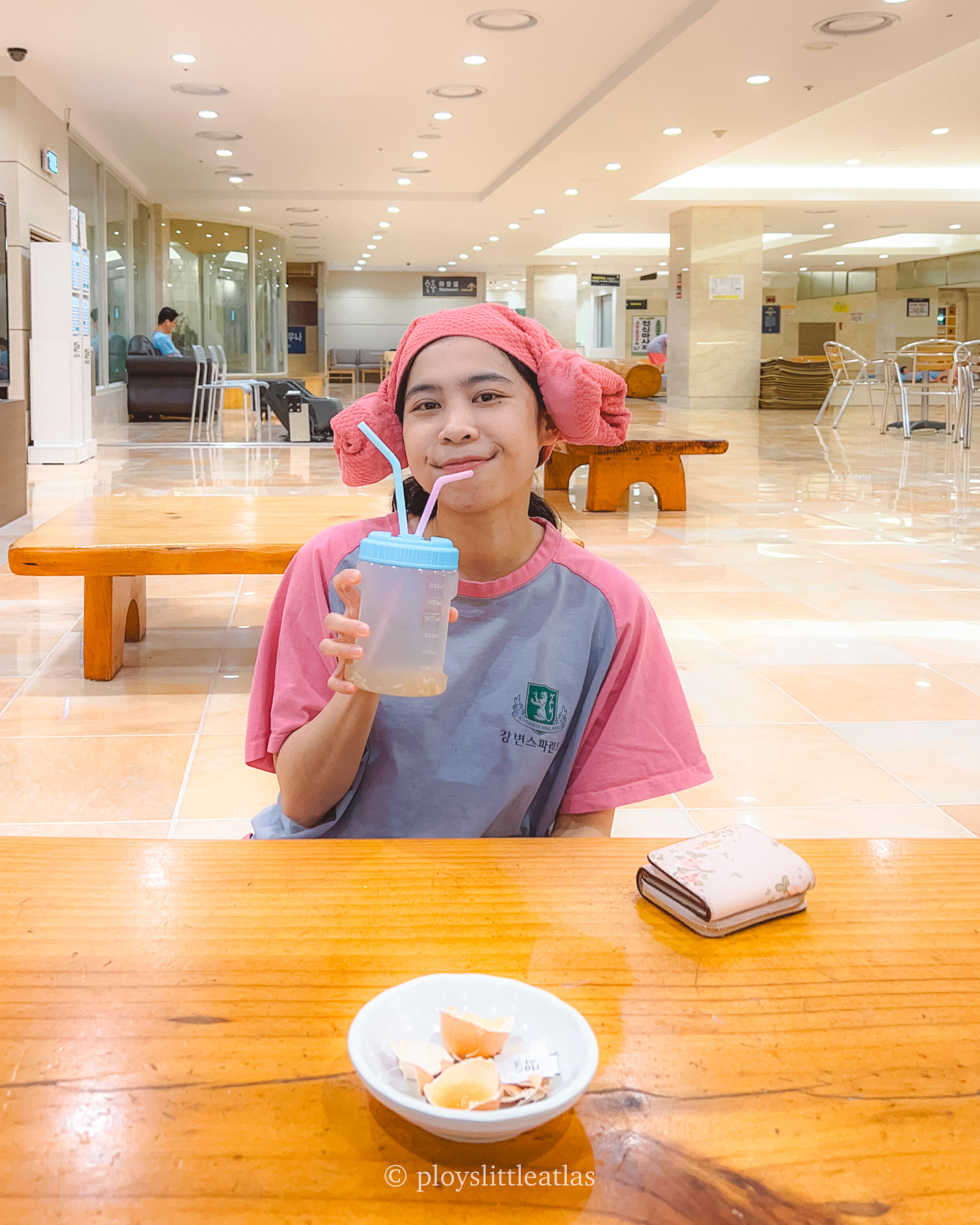
You’ve seen it in every K-drama: the adorable towel folded like sheep or ram horns. Here’s how to do it:
- Start with a standard jjimjilbang towel (rectangular and not too thick)
- Fold the towel in half lengthwise
- Fold the two ends inward toward the center, creating thick bands
- Roll both sides toward the center, forming spiral rolls
- Unfold the center slightly and place on your head
- Adjust so the rolls sit above your ears
It’s cute, functional (absorbs sweat), and keeps your ears warm in cold rooms.
Frequently Asked Questions
Q: Can foreigners use jjimjilbangs?
A: Absolutely. Many facilities now have English signage, and staff are accustomed to international visitors.
Q: Is it okay if I have tattoos?
A: Usually yes, though some high-end traditional jjimjilbangs may have restrictions. When in doubt, check in advance or choose a modern facility.
Q: Do I need to bring my own soap and shampoo?
A: Most provide basic toiletries, but bringing your own ensures you have products you prefer.
Q: Are towels and clothes really provided?
A: Yes—you receive a small towel and one set of jjimjilbang clothes upon entry.
Q: How long should I plan to stay?
A: Locals typically spend 3–6 hours, though some stay overnight. A minimum of 2–3 hours lets you experience the baths and a few heated rooms without rushing.
Q: Is it safe to sleep overnight?
A: Yes, it’s very common. Sleeping areas are gender-separated or coed with mats provided. It’s an affordable option for travelers.
Q: What about my phone?
A: Phones are allowed in communal areas but should be silenced. Photography is strictly prohibited in the bath areas.
Final Thoughts: Embracing the Jjimjilbang Experience
Visiting a jjimjilbang for the first time can feel intimidating—there’s nudity, unfamiliar customs, and a whole vocabulary of heated rooms to navigate. But here’s the secret: everyone feels a little awkward at first. The magic of jjimjilbangs is that within minutes, you realize no one is paying attention to you. Koreans have grown up with this culture, and they’re focused on their own relaxation.
What you’ll discover is a uniquely Korean way of resting—lying on a warm ondol floor, surrounded by the quiet hum of people napping, the gentle crack of eggs being opened, and the sweet taste of sikhye cooling you down after a sweat session. It’s not just a spa treatment; it’s an immersion into how Koreans care for themselves and connect with others.
So embrace the heat, fold your towel into sheep horns, crack an egg on your forehead, and let the jjimjilbang work its magic. You might just find yourself planning your next visit before you’ve even left.
Did this entry help you? Or Did you enjoy my photos? Help support my small blog by giving a little cup of joe. I am always grateful when readers reach out wanting to support 🙂
p.s. This post is independently created. However, when you book or purchase something through the retail links, I may earn an affiliate commission to help keep Ploy’s Little Atlas running. Thank you very much for your support!
p.p.s All images used (unless specified) are owned by the author of the blog and permission is required for a repost. Please, reach out via social media channels to ask beforehand if you’d like to use them.