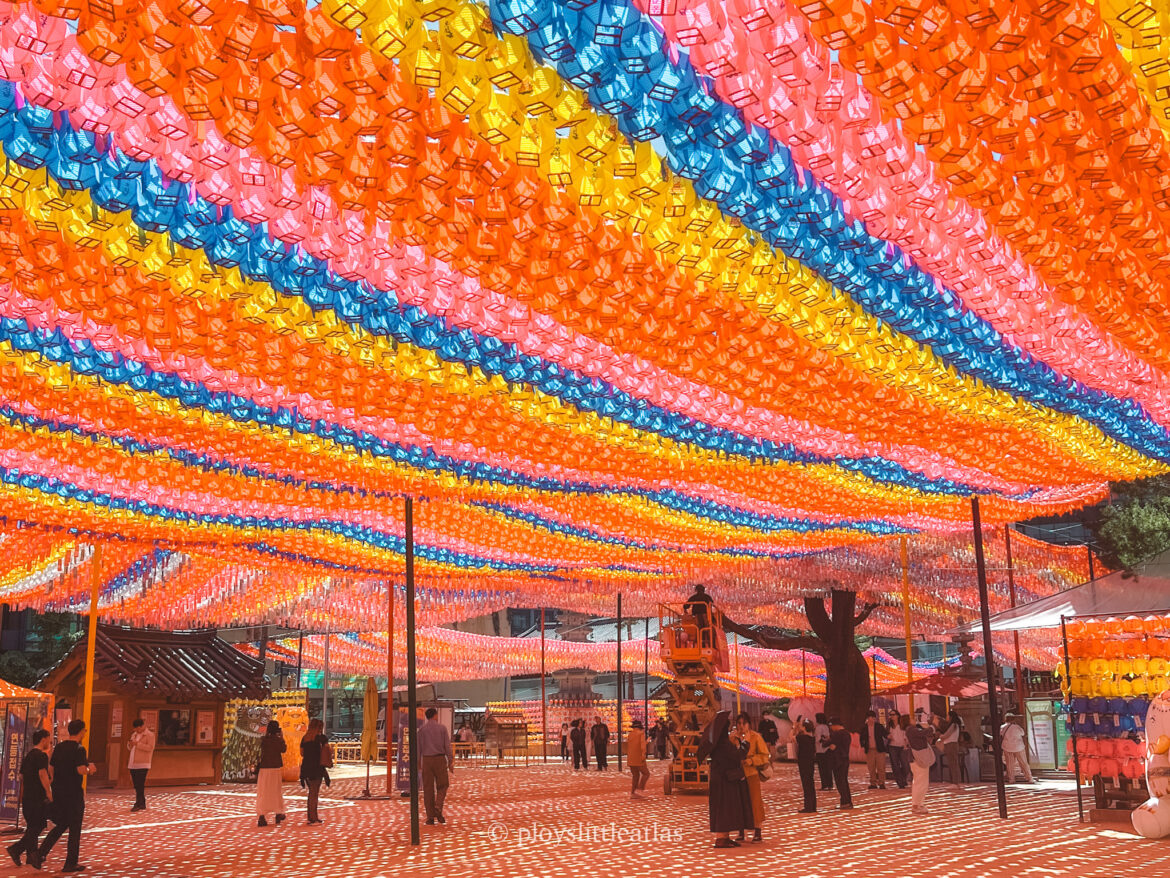
If you’re in Seoul during the spring, there is one place that absolutely deserves a top spot on your itinerary: Jogyesa Temple (조계사).
While Seoul is a city that never sleeps, Jogyesa offers a different kind of energy. During the annual Lotus Lantern Festival (Yeondeunghoe), this historic site transforms from a peaceful urban sanctuary into a breathtaking sea of color. Whether you’re a photographer hunting for that perfect shot or a traveler seeking a deep dive into Korean culture, here is everything you need to know about visiting Jogyesa right now.
The Magic of Yeondeunghoe (연등회)
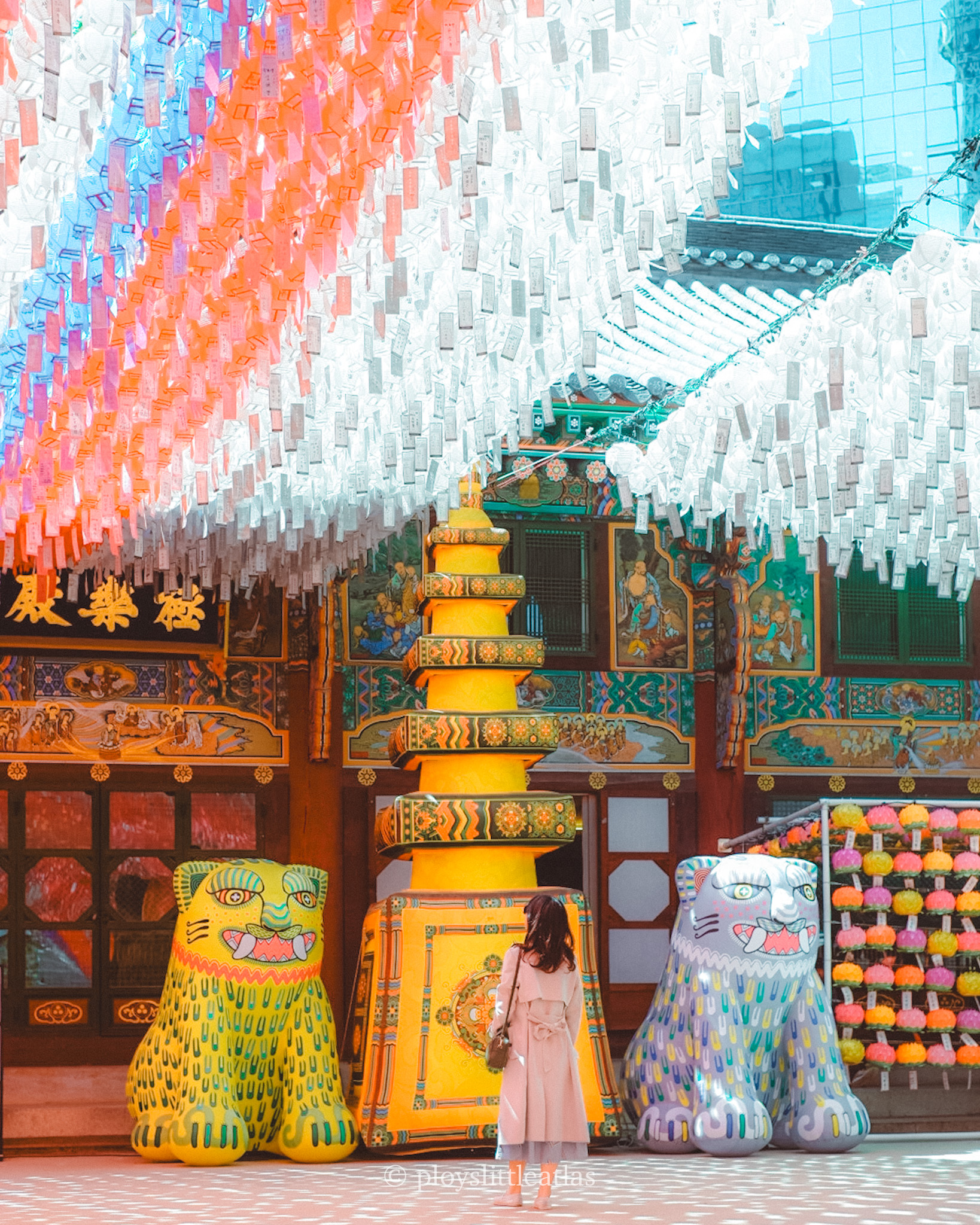
The Lotus Lantern Festival is a tradition that dates back over 1,200 years to the Silla Dynasty. Recently designated as a UNESCO Intangible Cultural Heritage of Humanity, the festival celebrates Buddha’s Birthday, symbolizing the “lighting of the world” with wisdom. At Jogyesa—the head temple of the Jogye Order of Korean Buddhism—this is manifested as a literal “sky” of lanterns. Thousands of colorful paper lotuses are hung across the courtyard, creating a dense, glowing canopy that completely covers the sky.
Why Jogyesa is Special
Unlike many of Korea’s famous temples tucked away in the mountains, Jogyesa is located right in the heart of the city, surrounded by the modern skyscrapers of Jongno.
The Chinese Scholar Tree: Look for the massive, 450-year-old tree in the center of the courtyard. During the festival, lanterns are draped from its branches, making it look like something out of a fairy tale.
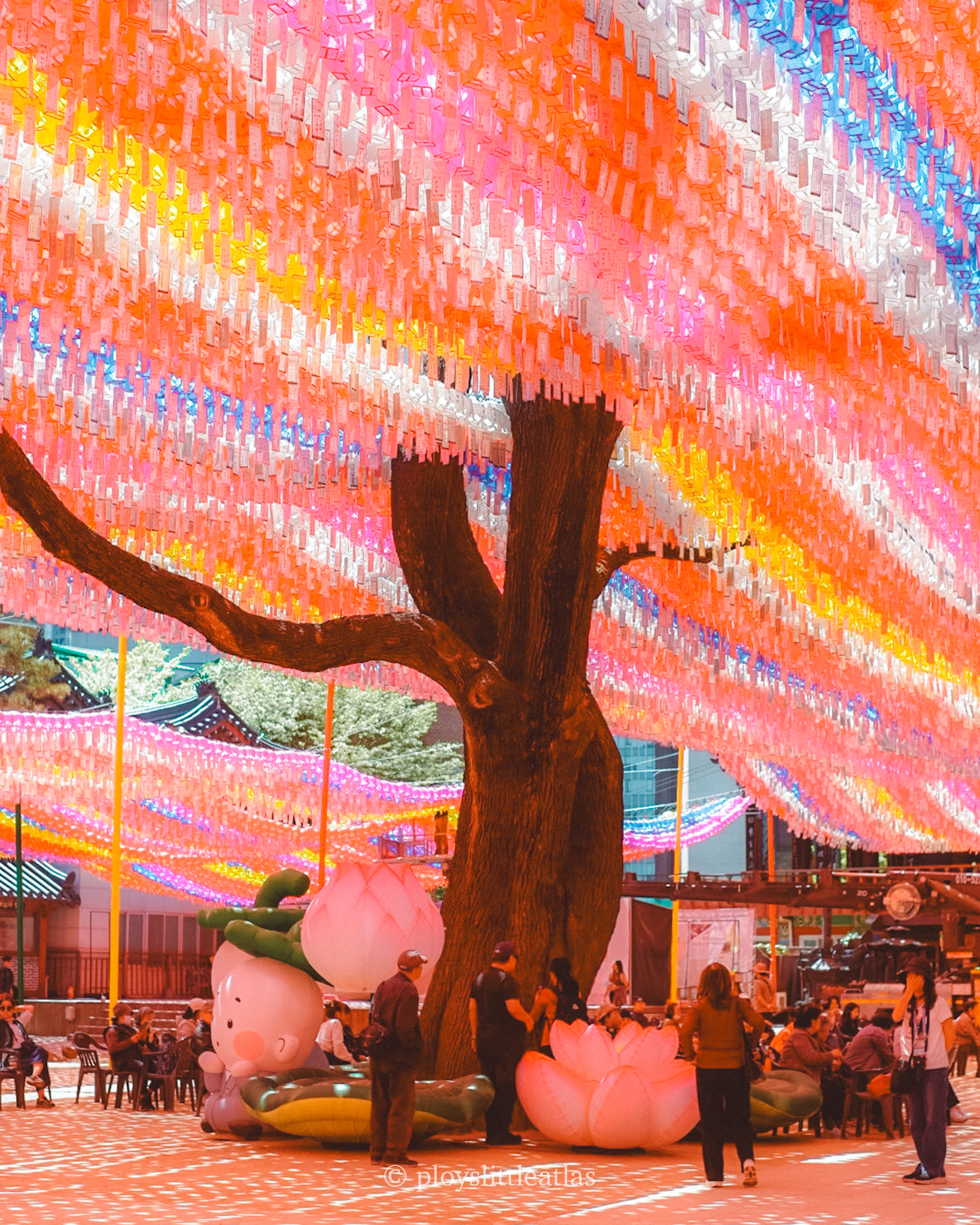
The Atmosphere: The juxtaposition of the traditional, ornate temple architecture against the backdrop of Seoul’s modern skyline is a photographer’s dream.
Accessible Culture: Because it’s in the city, it’s one of the best places for international visitors to participate in hands-on activities like lantern making or traditional tea ceremonies.
Essential Visitor Info (2026 Edition)
- 📍 Location: Jogyesa Temple (Jongno-gu)
- 🗓️ Best Time to Visit: The lanterns are typically on display from late April through the end of May.
- ⏰ Hours: The temple grounds are open 24/7.
- 💲 Entrance Fee: Free.
- 🚇 How to Get There:
- Subway Line 1: Jonggak Station (Exit 2). Walk straight for about 7 minutes.
- Subway Line 3: Anguk Station (Exit 6).
Photography Tips for Your Blog/Insta 📸
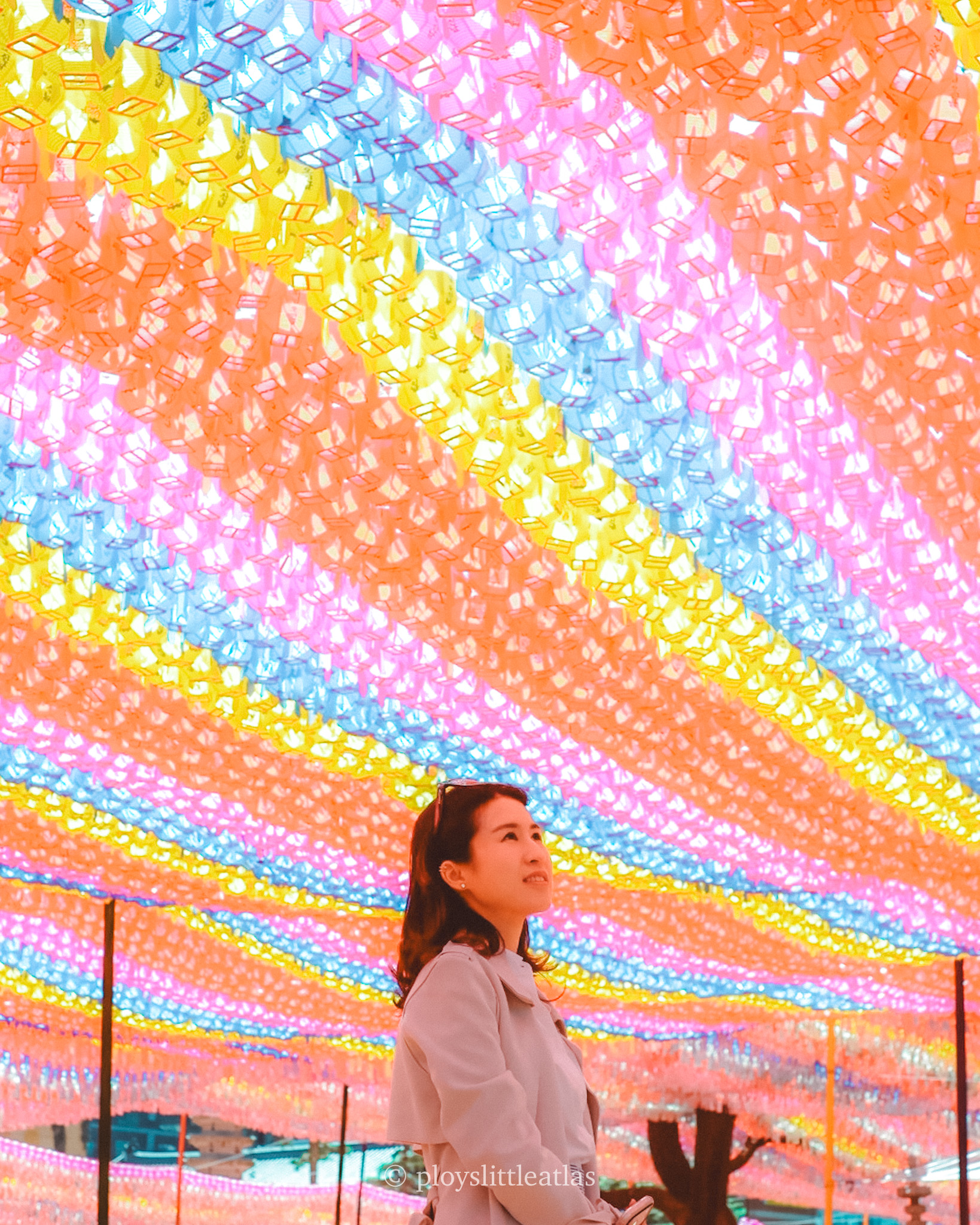
The “Low Angle” Shot: Squat down and shoot upward toward the lantern canopy to fill the entire frame with color. This creates an immersive “tunnel” effect.
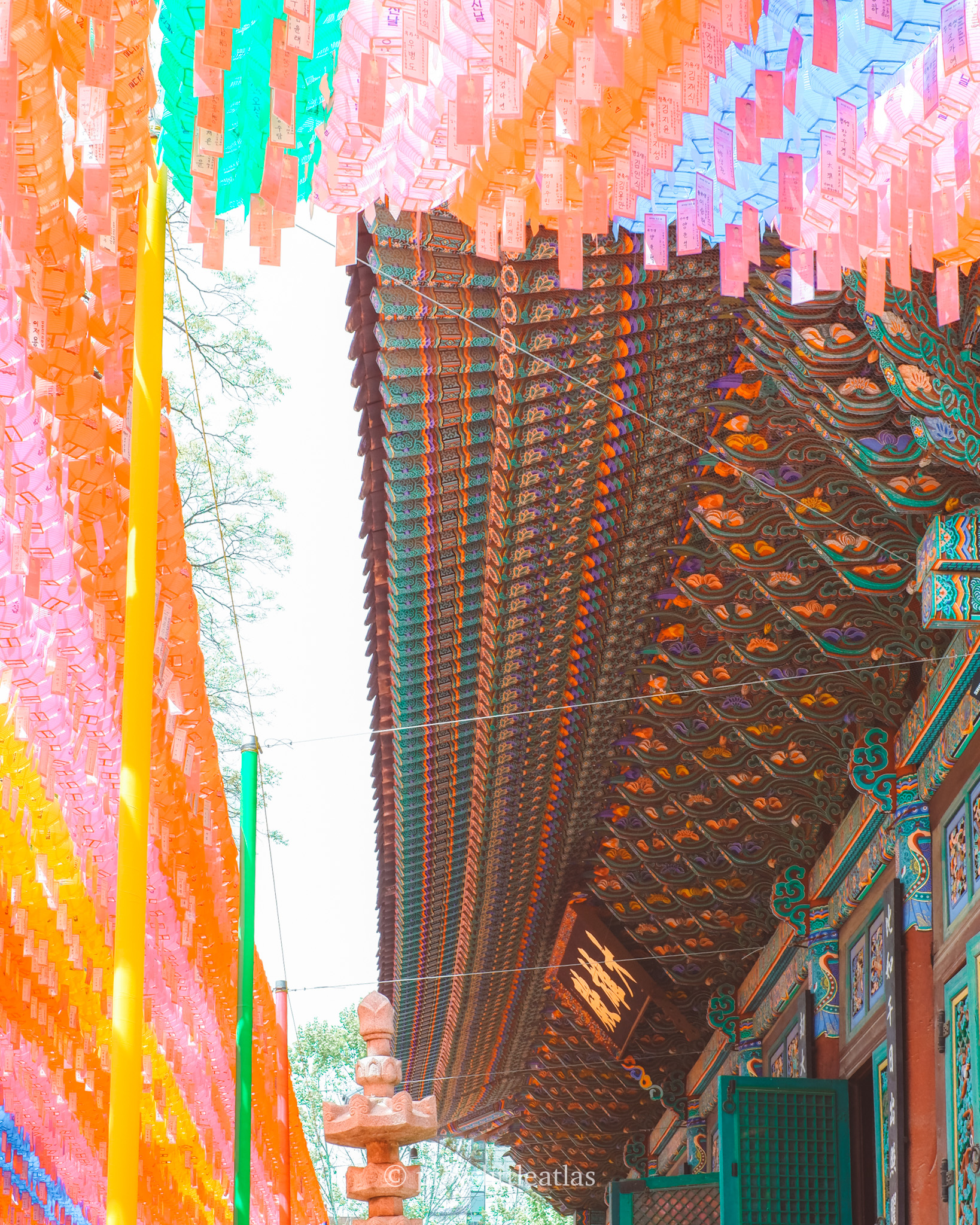
Focus on the Daeungjeon Gables: Instead of looking inside the hall, turn your lens toward the exterior of Daeungjeon (the Main Dharma Hall). The gables are adorned with incredibly intricate woodcarvings and traditional dancheong (colorful patterns). During the festival, the soft glow from the lanterns illuminates these architectural details, highlighting the craftsmanship of the temple without disturbing the prayer space inside.
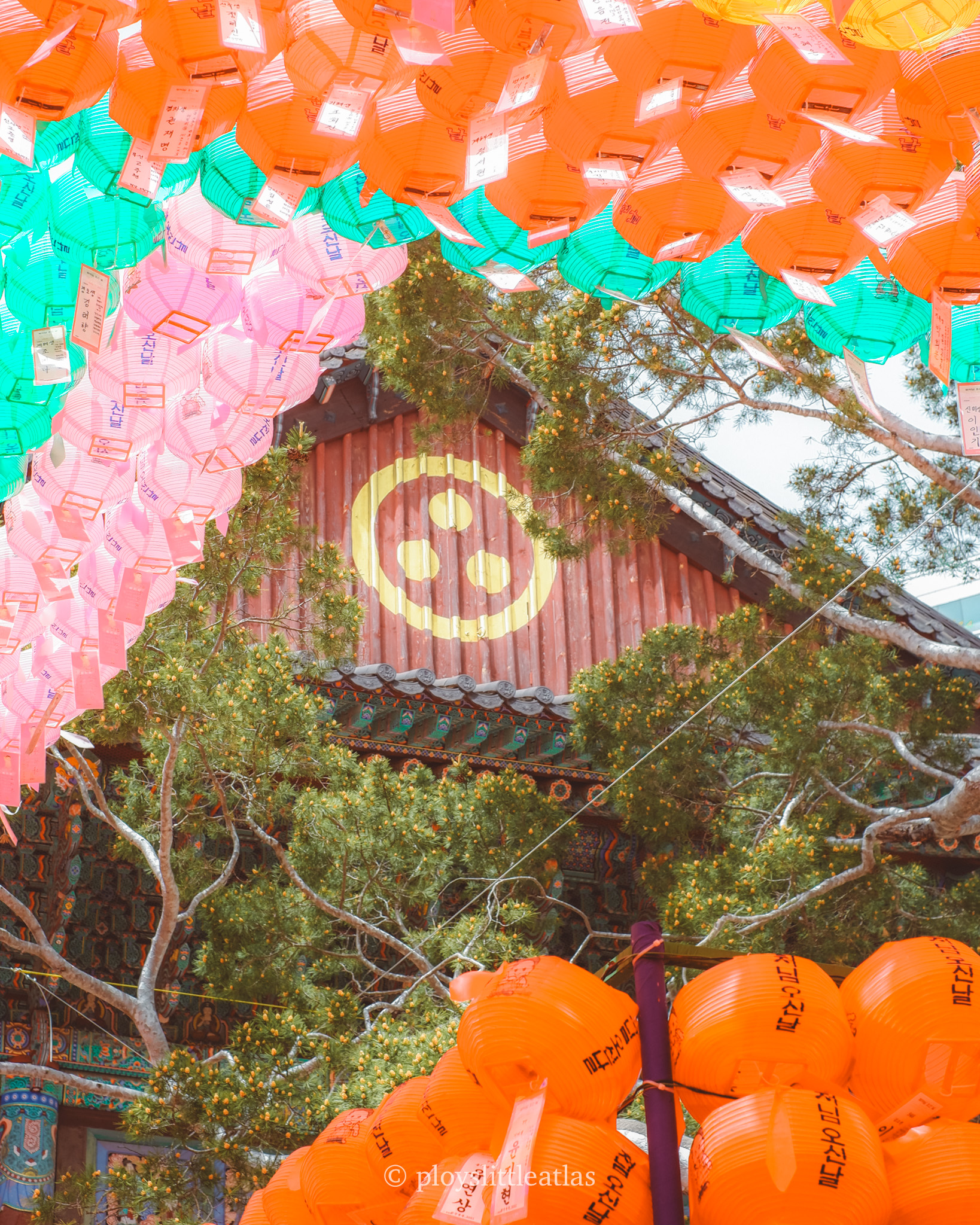
Macro Details: Don’t just shoot the big picture. Zoom in on the individual lotus petals or the handwritten wishes attached to the bottom of the lanterns.
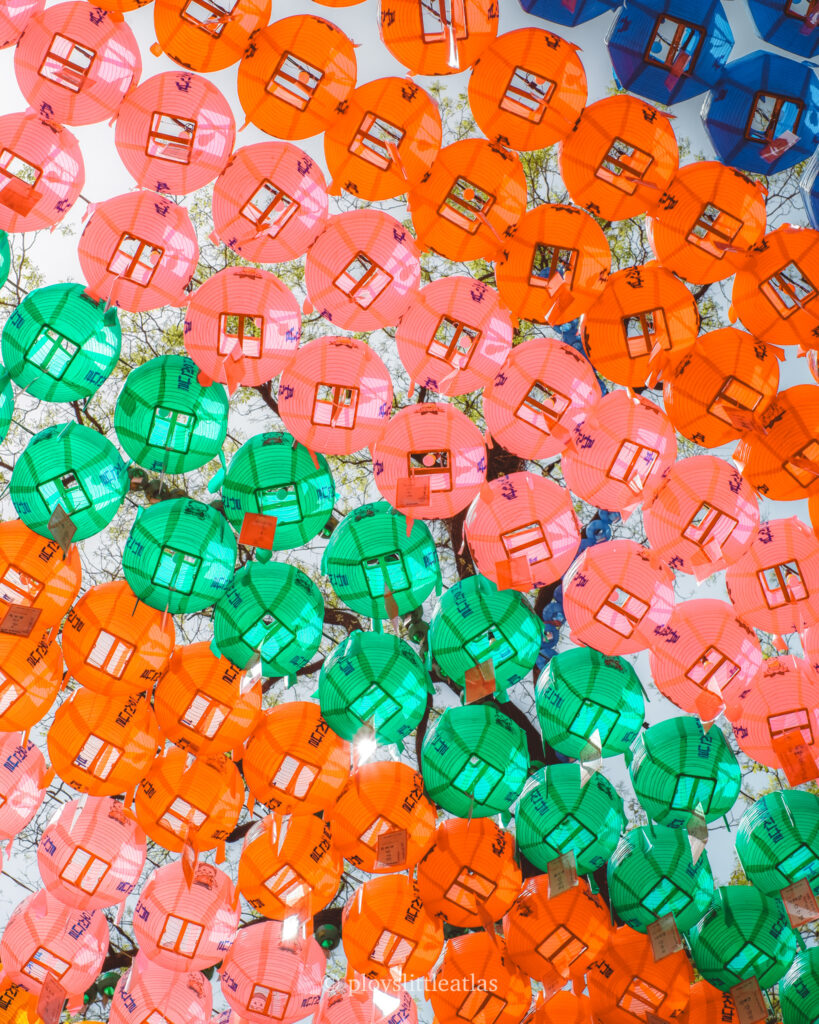
Night Mode: Since the lanterns glow brightly against the dark sky, ensure your camera isn’t overexposing the highlights so you can keep the rich colors of the paper lotuses.
Beyond the Temple
Since Jogyesa is centrally located, you can easily pair your visit with other nearby gems:
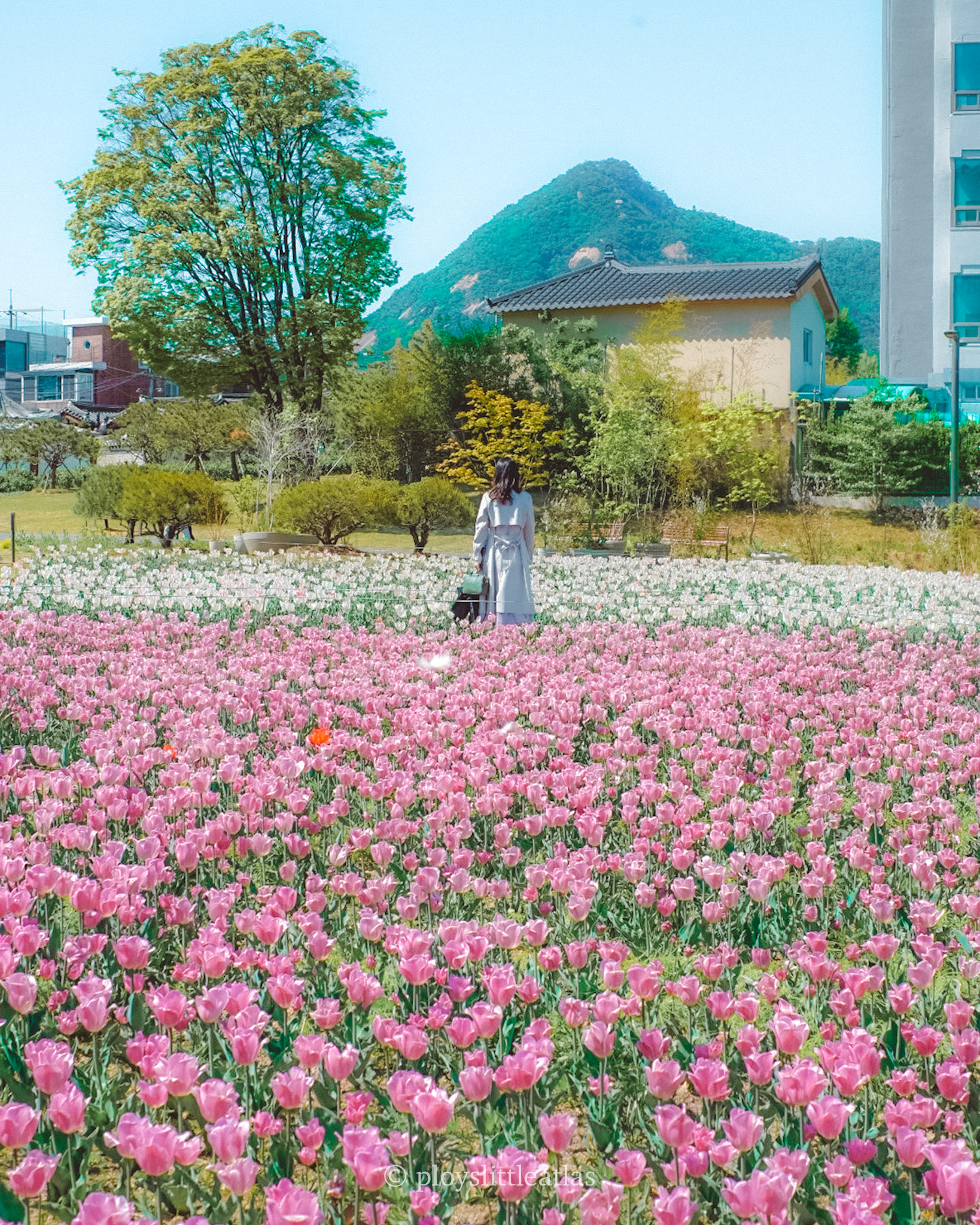
Yeollin Songhyeon Square (열린송현 녹지광장): Just a short walk from the temple, this massive open green space provides a breath of fresh air. It often hosts seasonal flower displays and cultural installations, offering a perfect wide-angle view of the surrounding mountains and city.
Insadong (1-minute walk): Explore traditional tea houses and art galleries right across the street. It’s the perfect place to grab a snack after your temple visit.
Cheonggyecheon Stream: During the festival period, look for large-scale lantern installations floating in the water nearby.
Gwanghwamun Square: A 10-minute walk away, where the official festival lighting ceremonies and large-scale sculptures are usually displayed.
Final Verdict
If you are looking for that one “must-see” cultural event in Seoul this season, the Jogyesa Lantern Festival is it. There is something deeply moving about standing beneath a canopy of thousands of lanterns, each representing a wish or a prayer, while the sounds of the city hum just beyond the temple walls.
It’s the perfect blend of ancient tradition and modern Seoul—a place where you can disconnect from the digital noise and reconnect with a sense of wonder. Whether you come for the photography, the heritage, or simply the peaceful atmosphere, Jogyesa offers a color-filled sanctuary that you truly have to see for yourself to believe.
Is Jogyesa on your list for this spring? Don’t wait too long—the lanterns don’t stay up forever!
Access Map
Did this entry help you? Or Did you enjoy my photos? Help support my small blog by giving a little cup of joe. I am always grateful when readers reach out wanting to support 🙂
p.s. This post is independently created. However, when you book or purchase something through the retail links, I may earn an affiliate commission to help keep Ploy’s Little Atlas running. Thank you very much for your support!
p.p.s All images used (unless specified) are owned by the author of the blog and permission is required for a repost. Please, reach out via social media channels to ask beforehand if you’d like to use them.