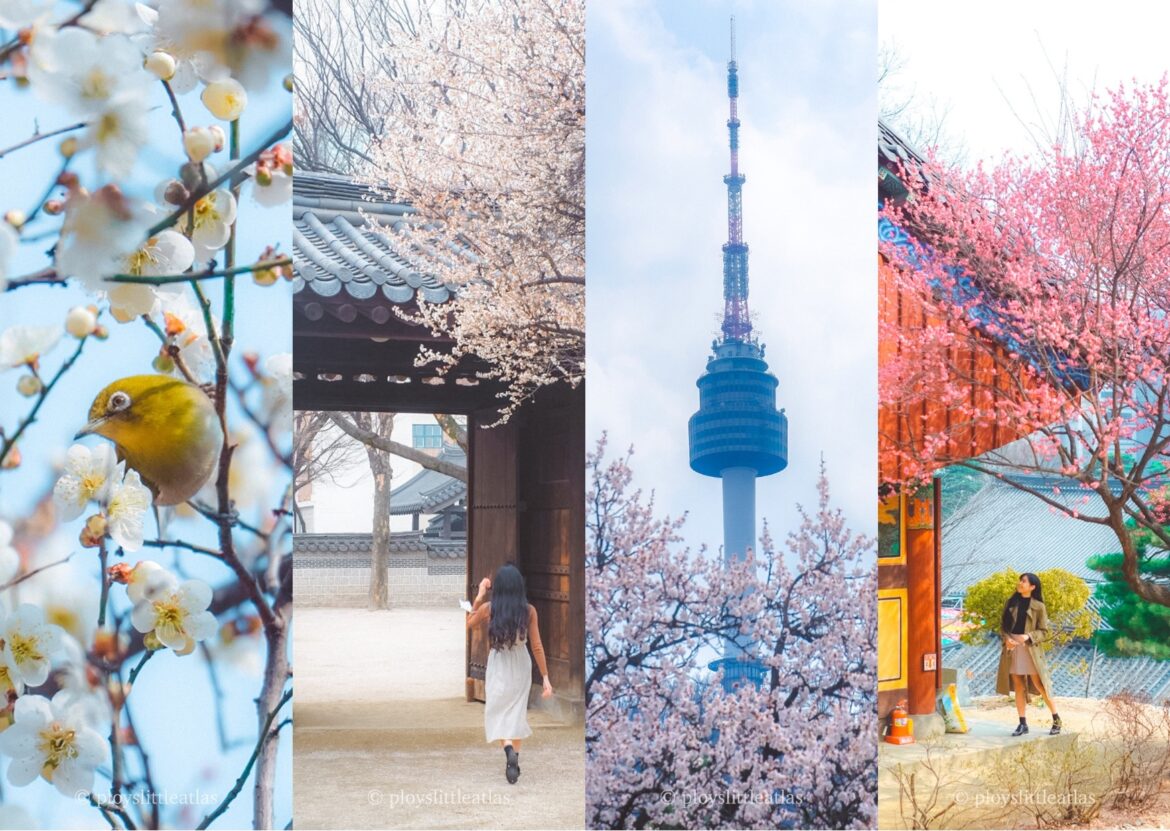
While the world raves about Korea’s cherry blossoms in April, those in the know understand that the real herald of spring is the humble, hardy plum blossom (maehwa). Before the cherry trees even think about budding, the plum trees burst into a fragrant display of whites, pinks, and deep magentas. There’s a certain poeticism to plum blossoms; they bloom boldly in the lingering chill of late winter, symbolizing perseverance and purity.
In Seoul, searching for these first blooms is a cherished tradition. It’s a less crowded, more contemplative way to welcome the warmer days. Whether you’re a photographer chasing the perfect contrast of old and new, a K-drama fan walking in the footsteps of your favorite characters, or simply someone yearning for a serene escape, Seoul’s plum blossom spots offer a unique and stunning start to the spring season.
When to See Plum Blossoms in Korea?
Timing is everything with plum blossoms. Generally, they bloom earlier than cherries, with the season typically kicking off in mid-to-late March. However, because Seoul experiences colder winters than the southern coasts, the peak bloom here usually falls within the last week of March and the very first few days of April.
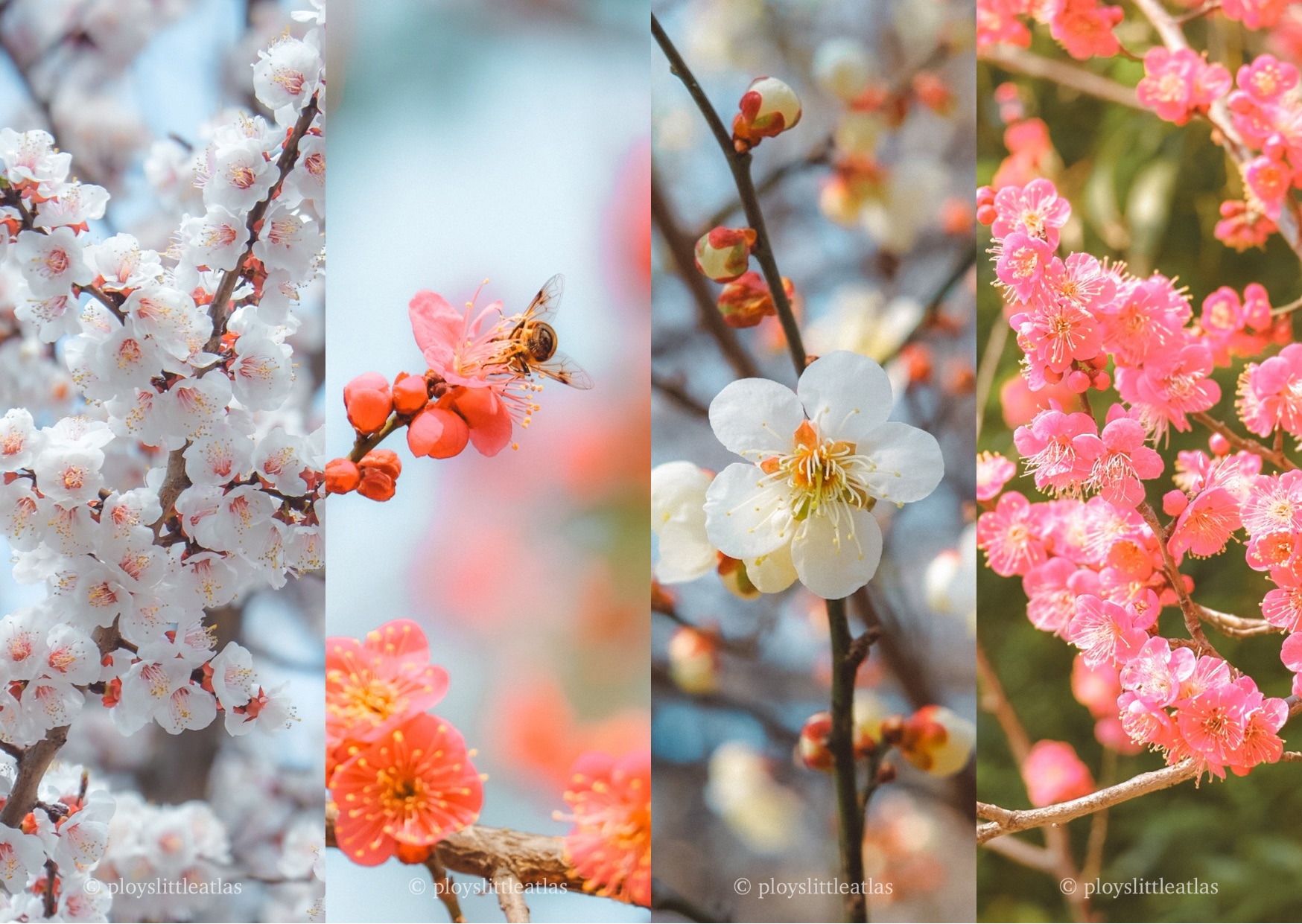
It’s important to note that the blooming period is a bit longer than that of cherry blossoms. Because there are many different varieties—from the early-blooming white Gyeolhyang to the later-blooming red Hongmaehwa—you can often enjoy plum blossoms over a span of two to three weeks, depending on the location and weather. Keep an eye on the forecast; a sudden warm spell can accelerate the bloom, while a cold snap might preserve them for a few extra days.
Ready to find your perfect plum blossom view? Here are the seven best spots in Seoul, each with its own unique charm.
1. Bongeunsa Temple (봉은사)
Nestled in the heart of bustling Gangnam, a stone’s throw away from the ultra-modern COEX Mall and the towering Starfield Library, lies the serene, thousand-year-old Bongeunsa Temple. This is perhaps the most iconic juxtaposition of spring in Seoul.
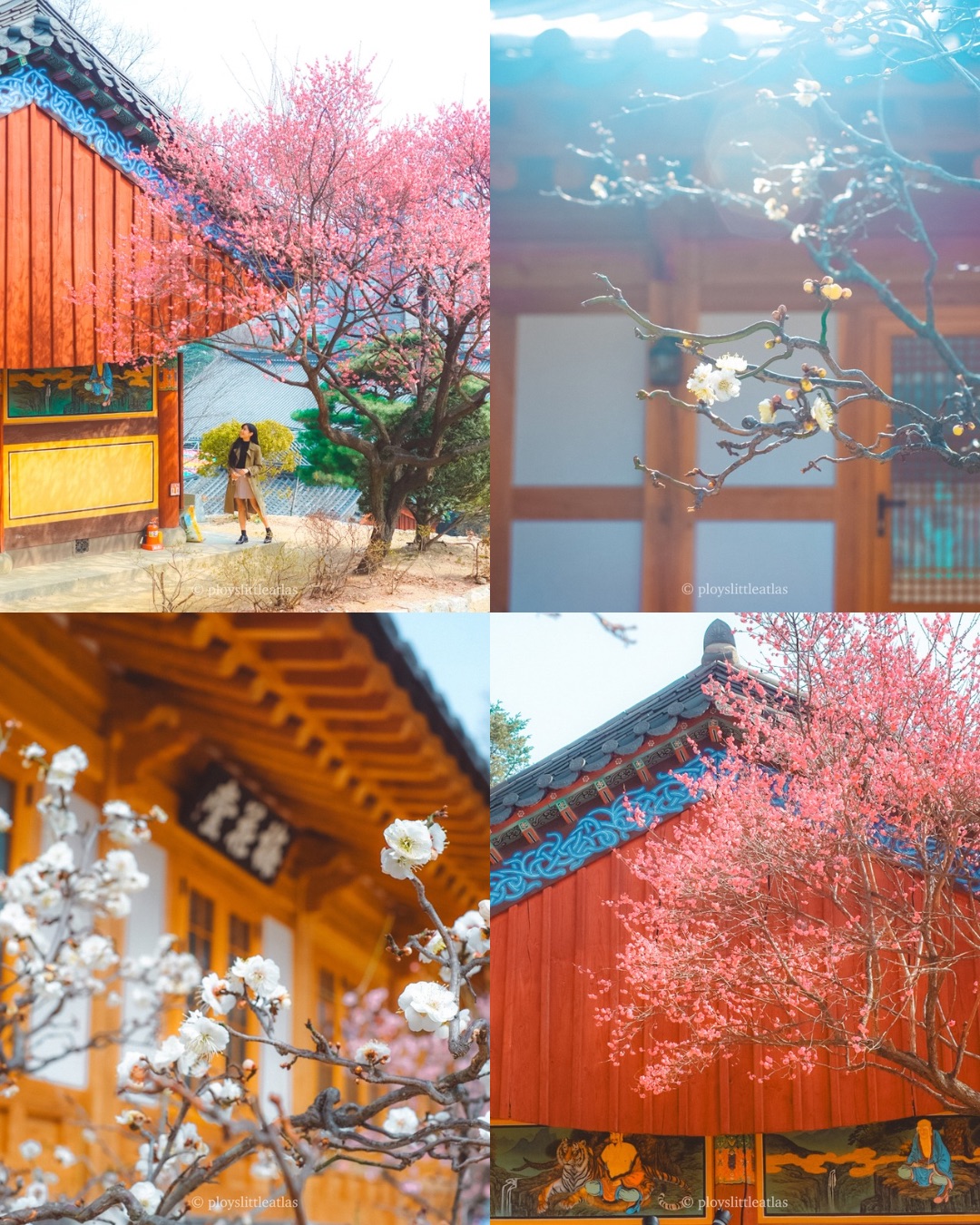
The Highlight: You’re here for one thing: the famous Red Plum Blossoms (Hong-maehwa) in front of Yeonggak Hall. Unlike the soft pinks found elsewhere, these blossoms are a deep, vibrant magenta. The sight of these fiery petals against the intricate, colorful dancheong (traditional temple paint) and the cold, sleek glass of the skyscrapers looming behind them is nothing short of breathtaking. It’s a photographer’s paradise and a visual representation of Seoul itself—ancient and futuristic, existing side-by-side.
Pro-Tip: This spot is popular, and the temple grounds can get busy, especially with visitors from the nearby mall. To capture that perfect, serene shot without photobombers, plan to visit early in the morning. The soft morning light filtering through the temple gates also makes the red petals glow.
Getting There: Take Seoul Subway Line 9 to Bongeunsa Station and exit through Exit 2. The temple is a short, signposted walk away.
2. Yongdap Plum Village (용답매화마을)
If you want to trade the temple bells for the sound of trickling water and escape the crowds, head east to Yongdap-dong. Tucked quietly along the banks of the Cheonggyecheon Stream, this area feels like someone picked up a slice of the peaceful countryside and placed it gently inside the city.
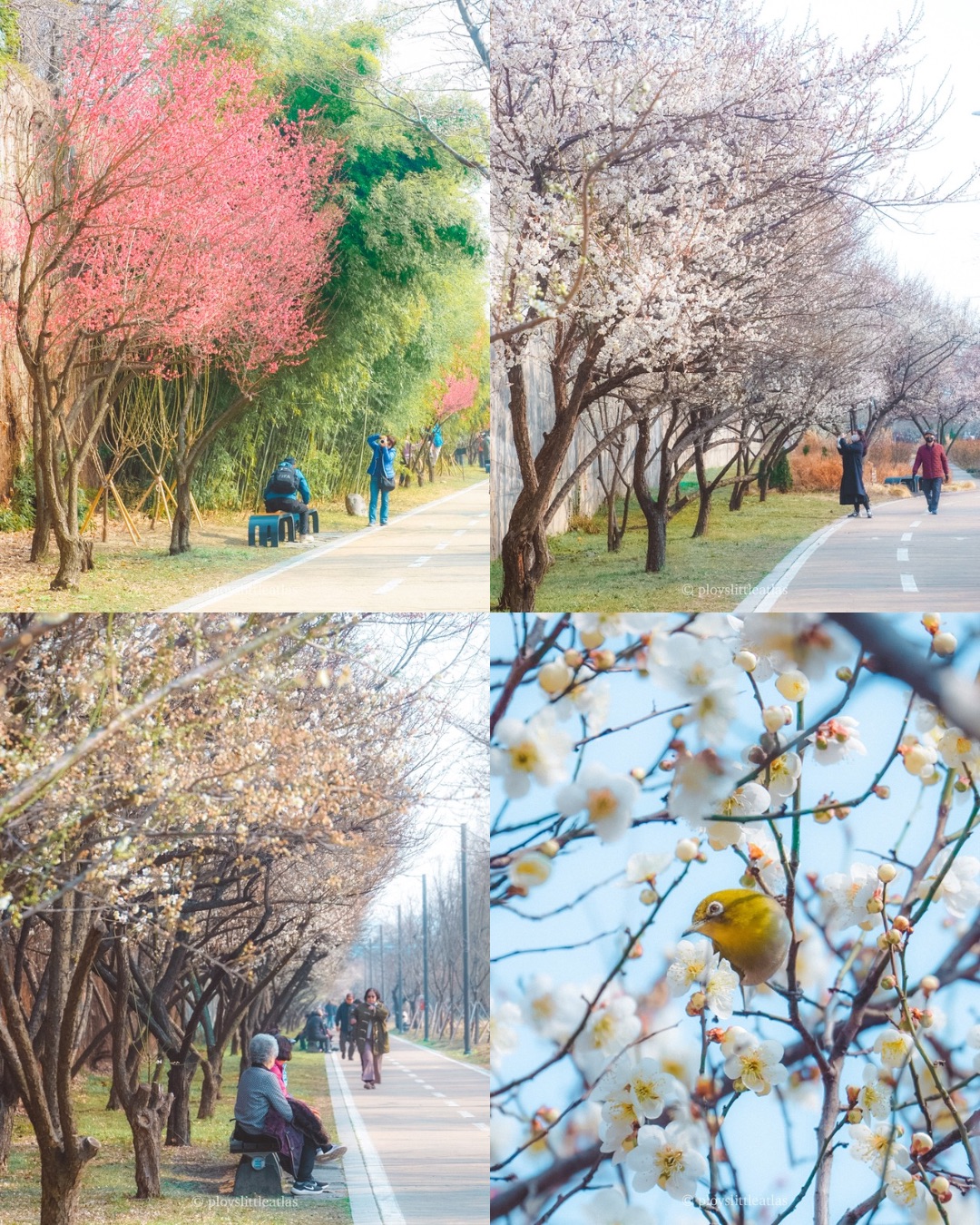
The Highlight: This isn’t a single tree but a long, scenic line of plum trees winding along the pedestrian path. What makes Yongdap special is the diversity of its breeds. As you stroll, you’ll be treated to a gradient of color: pure white blossoms as delicate as snow, soft blushing pinks, and deep, show-stopping magentas. Look closely for the patches where the dark pink blooms are planted alongside clusters of shiny, vibrant green bamboo. That particular color combination—deep pink against emerald—is a visual treat unique to this village.
K-Drama Bonus: For the fans! The pedestrian bridge crossing the Cheonggyecheon right by the plum village is the very spot where iconic scenes from the beloved drama Goblin were filmed. So, you can enjoy the flowers and get your drama fix in one go.
Getting There: Take Seoul Subway Line 2 to Yongdap Station, use Exit 2, and walk straight towards the stream. You’ll see the pink and white clouds from the path above.
3. Changdeokgung Palace (창덕궁)
For an experience that feels steeped in history and sophistication, you must visit Changdeokgung Palace. As a UNESCO World Heritage site, it is arguably the most beautiful of Seoul’s five grand palaces, and in spring, it becomes a royal canvas for plum blossoms.
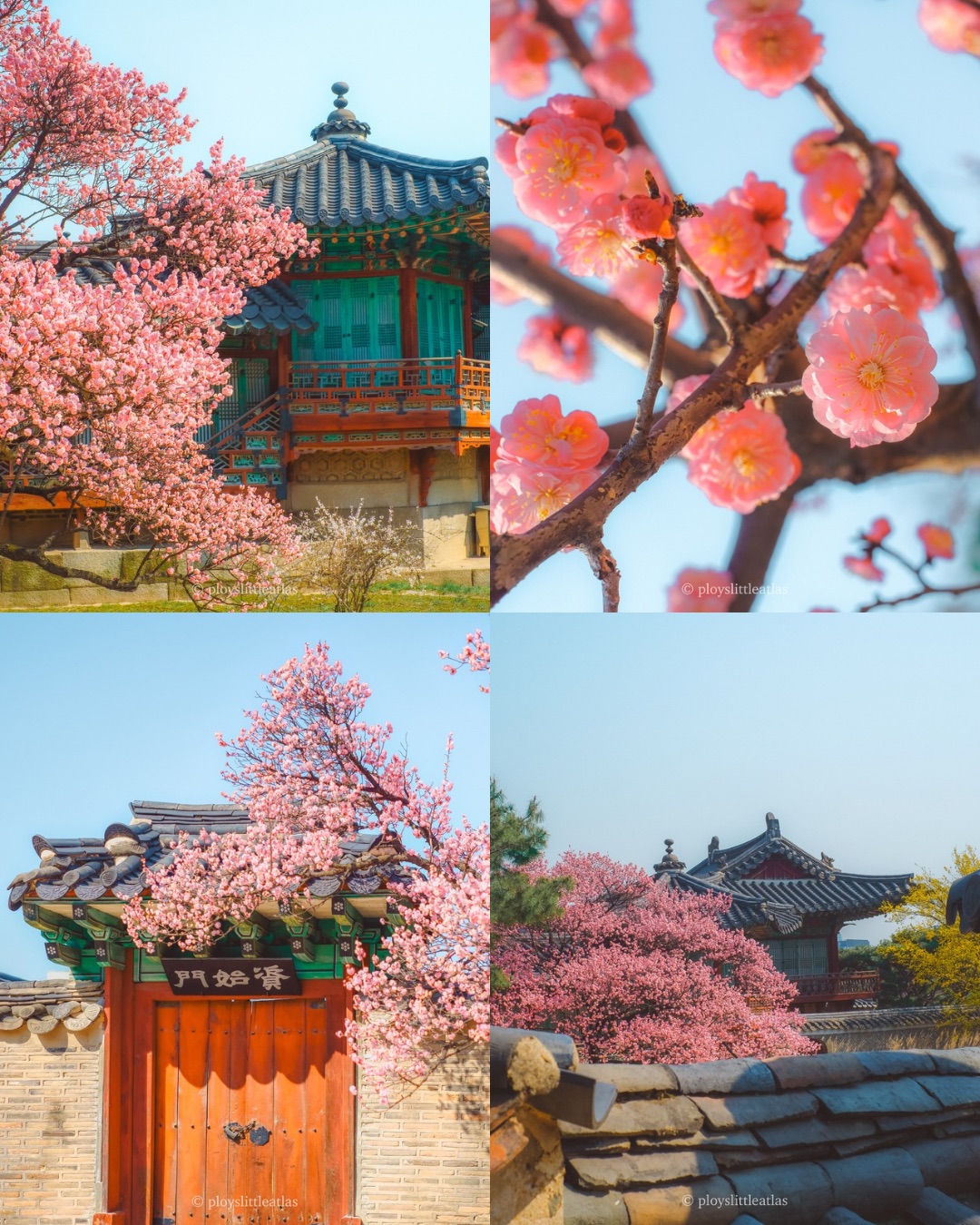
The Highlight: All the palace grounds are lovely, but your quest should be for the famous Seonjeongjeon Plum Tree. Located near the Seonjeongjeon Hall (where the king once held daily meetings with his advisors), this ancient tree is a masterpiece of nature. Its gnarled, graceful branches sweep and drape over the low stone walls of the palace, adorned with delicate, pure white blossoms. Viewing this tree feels less like flower-spotting and more like appreciating a classical Korean painting come to life. The contrast of the old wood, the white petals, and the historical architecture is incredibly poetic.
Note: While the rear Secret Garden (Huwon) requires a guided tour ticket, most of the beautiful plum trees, including this star attraction, are located within the main, publicly accessible palace grounds. Just be sure to arrive early, as the palace is popular for a reason.
Getting There: Take Seoul Subway Line 3 to Anguk Station and exit through Exit 3. The palace entrance is just a few minutes’ walk away.
4. Unhyeongung Palace (운현궁)
Just a stone’s throw from the busier tourist hubs of Insadong and Anguk-dong lies Unhyeongung, a serene pocket of history that often gets overlooked. Unlike the sprawling state grounds of Gyeongbokgung, this was a private residence—specifically, the home of the Heungseon Daewongun, the father of King Gojong.
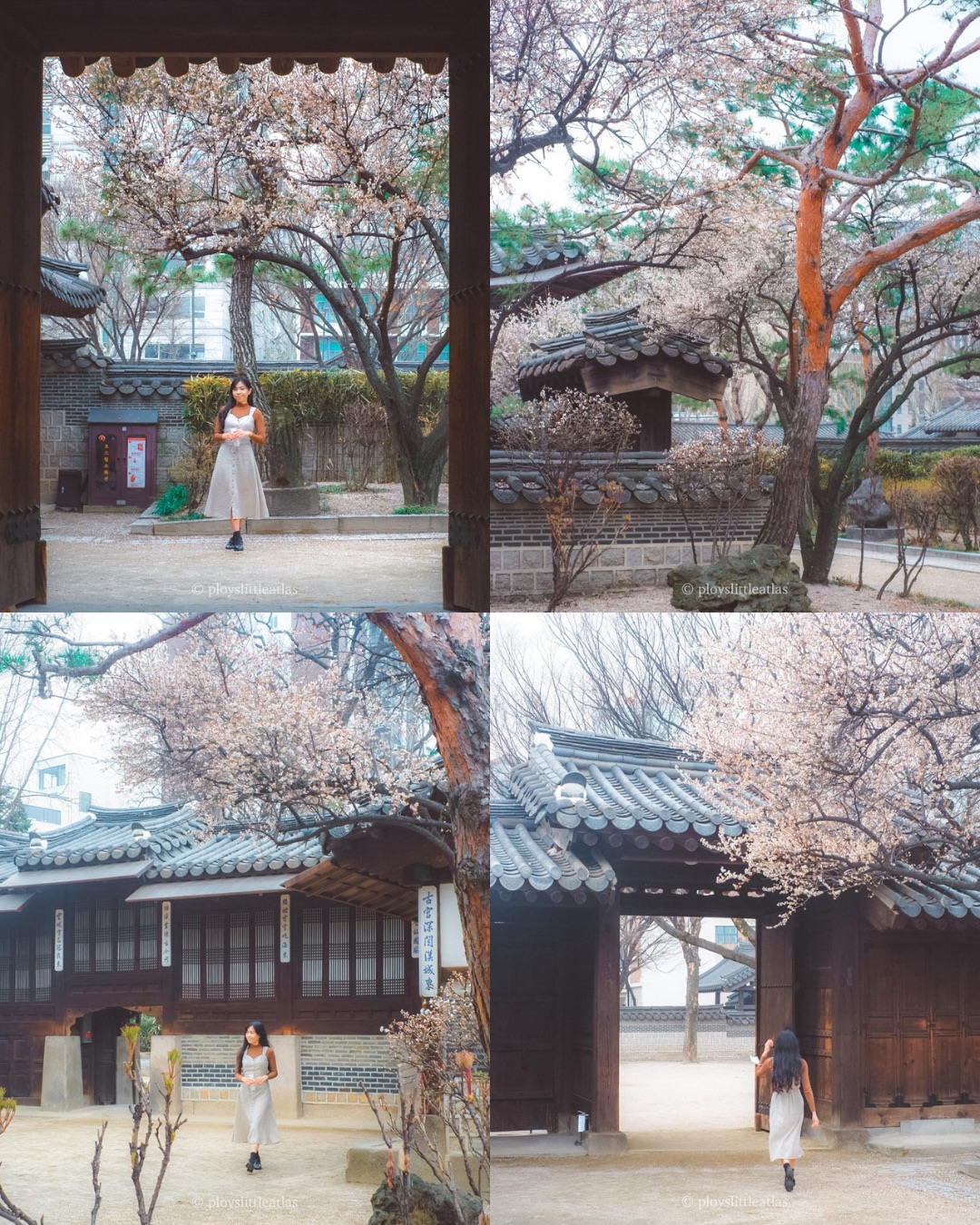
The Highlight: This intimate scale is exactly what makes the plum blossom viewing here so special. The blossoms aren’t lined up in grand formations but are scattered throughout the smaller, enclosed courtyards. You’ll find them tucked beside a quiet pavilion or framing a traditional door. This setup offers a “private garden” feel, as if you’ve stumbled upon a secret retreat. The atmosphere is quiet, regal, and perfect for those who want to appreciate the delicate scent of the flowers in near-complete silence, away from the selfie sticks.
Getting There: From Anguk Station (Line 3), take Exit 4. It’s a very short, two-minute walk from the exit.
5. Namsangol Hanok Village (남산골한옥마을)
For a single shot that captures the essence of Seoul’s layered beauty, Namsangol Hanok Village is unbeatable. This is a beautifully restored village of traditional Korean houses (hanok) nestled at the foot of Namsan Mountain.
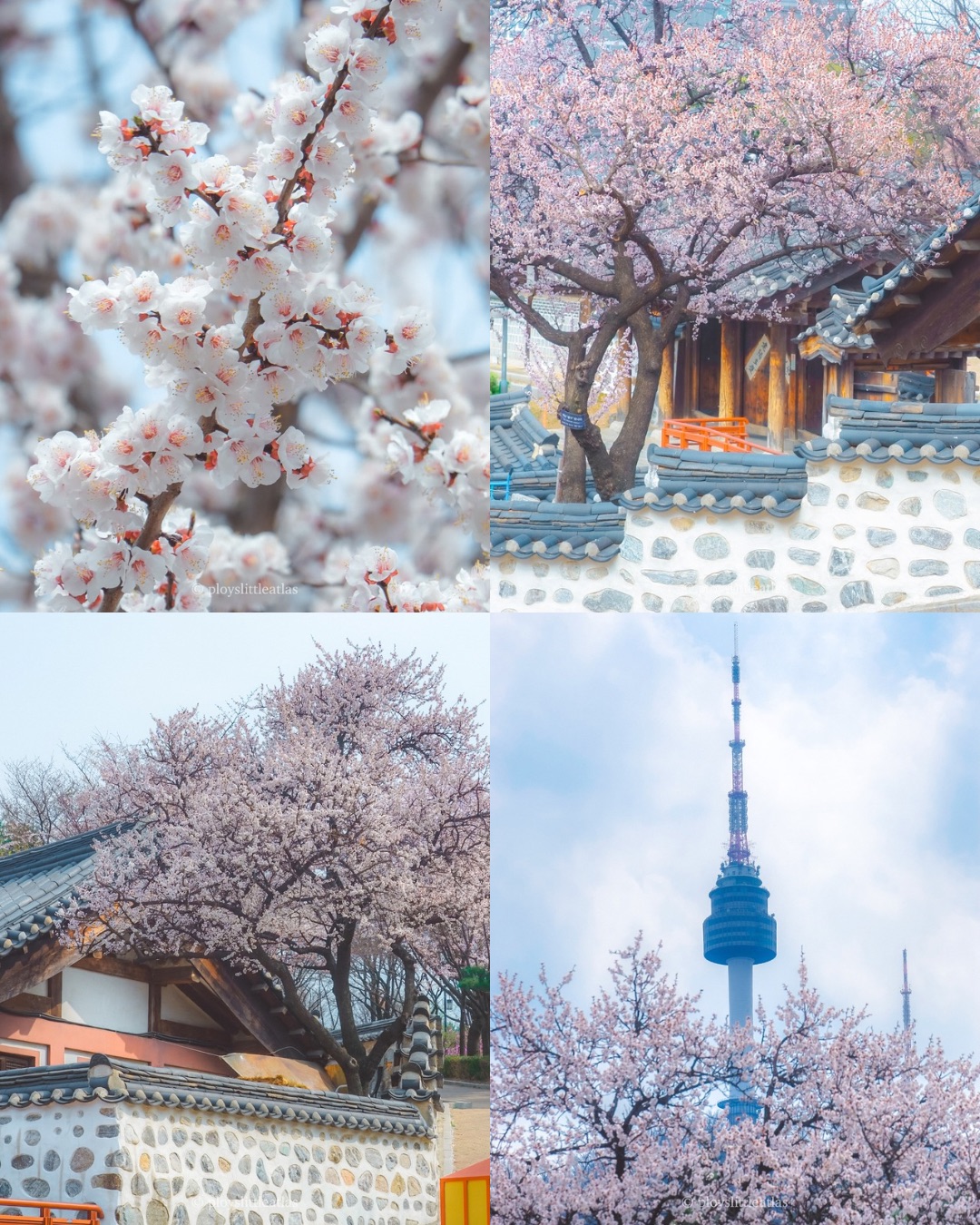
The Highlight: The magic happens when the plum blossoms hit their peak (typically in the last week of March). You’ll find delicate, pink-hued plum tree branches gently framing the tiled roofs of the hanoks. And if you angle your camera just right, you can capture the modern city and the iconic N Seoul Tower peeking through the blossoms in the background. It’s a scene that perfectly layers history, nature, and the contemporary skyline into one postcard-perfect frame. It’s a relatively small village, so you can easily combine this visit with a walk up Namsan or a trip to the nearby cable car.
Getting There: Take Seoul Subway Line 3 or 4 to Chungmuro Station and use Exit 4. The village entrance is just ahead.
6. Hyochangwon-ro (효창원로)
If you’ve done the temples and palaces and want to see how Seoulites live with the seasons, you need to visit Hyochangwon-ro. This is the true “hidden gem” of the list—a 2.8-kilometer stretch of ordinary city road that transforms into an extraordinary floral corridor in late March.
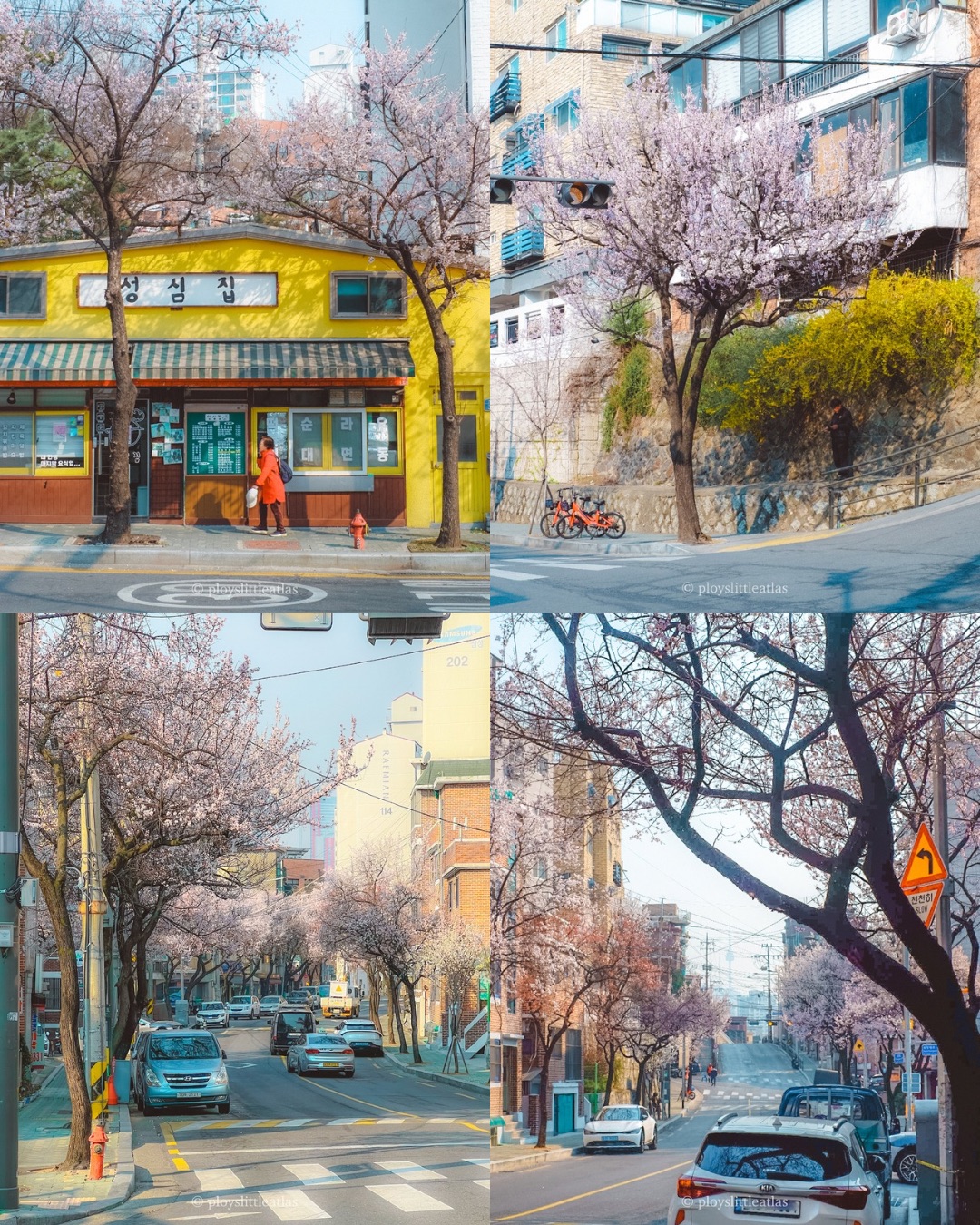
The Highlight: Forget curated gardens; this is a lived-in street. The plum trees here are mature and dense, their branches arching over the sidewalks and roads to create a stunning tunnel-like effect of pale pink and white. As you walk, you’ll see the soft blossoms draped over everyday objects: traffic lights, bus stop signs, and even the railings of apartment balconies. This beautiful urban juxtaposition is what makes this spot so special. It’s an authentic slice of “everyday Seoul,” proving that beauty doesn’t always need a ticket booth. Bring your camera, but also take a moment to just look up and appreciate the floral canopy.
Getting There: Take Seoul Subway Line 6 to Hyochang Park Station, use Exit 3, and you’ll emerge right onto the beautiful, tree-lined street.
7. Seoul Forest (서울숲)
Often called the “Central Park of Seoul,” this massive green space offers a more “nature-first” blossom experience away from the city’s stone and steel. If you’re looking for a spacious, vibrant atmosphere where you can literally stop and smell the flowers, Seoul Forest is the place to be. This beloved urban park is a favorite among locals, and during plum blossom season, certain corners become absolutely magical.
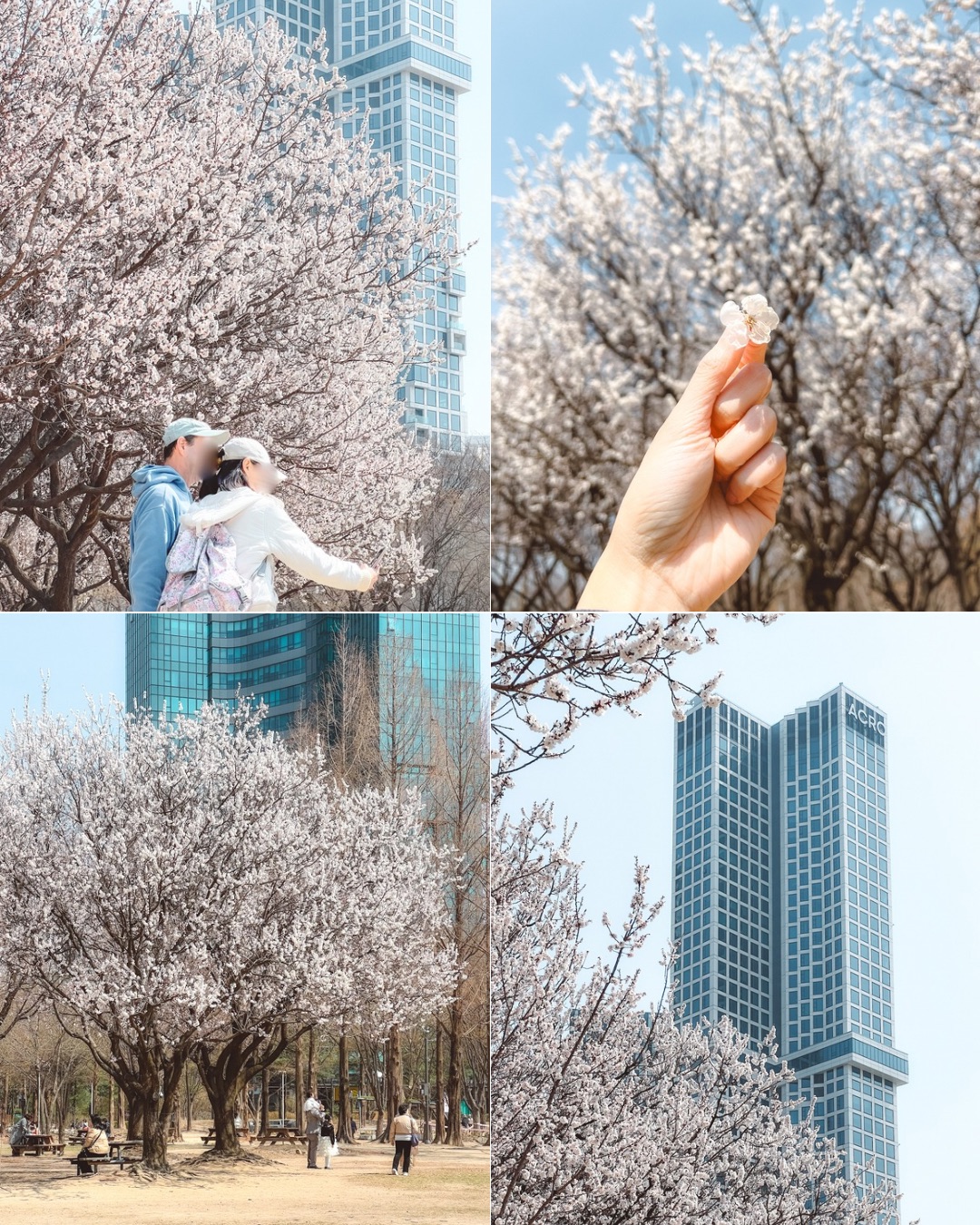
The Highlight: While the park is vast, your mission is to head toward the Cultural and Art Park area or the paths winding around the serene Mirror Pond. Here, you’ll find lovely clusters of mature plum trees with branches heavy with blossoms. Unlike the curated single trees at temples, the charm here is in the landscape. Because the park is so expansive, you can easily find a quiet wooden bench nestled under a blooming tree—the perfect, peaceful spot for a spontaneous picnic. The real magic of Seoul Forest, however, is the vibe. This is where you’ll see friends gathering with takeout coffee, couples taking romantic strolls, and families laying out blankets to enjoy the first warm days of spring.
Getting There: Take Seoul Subway Line 2 to Ttukseom Station and use Exit 8. Alternatively, take the Suin-bundang Line to Seoul Forest Station via Exit 4. The park is huge, so grab a map at the entrance to find the blooming hotspots!
8. Guro Banseok Church (구로반석교회)
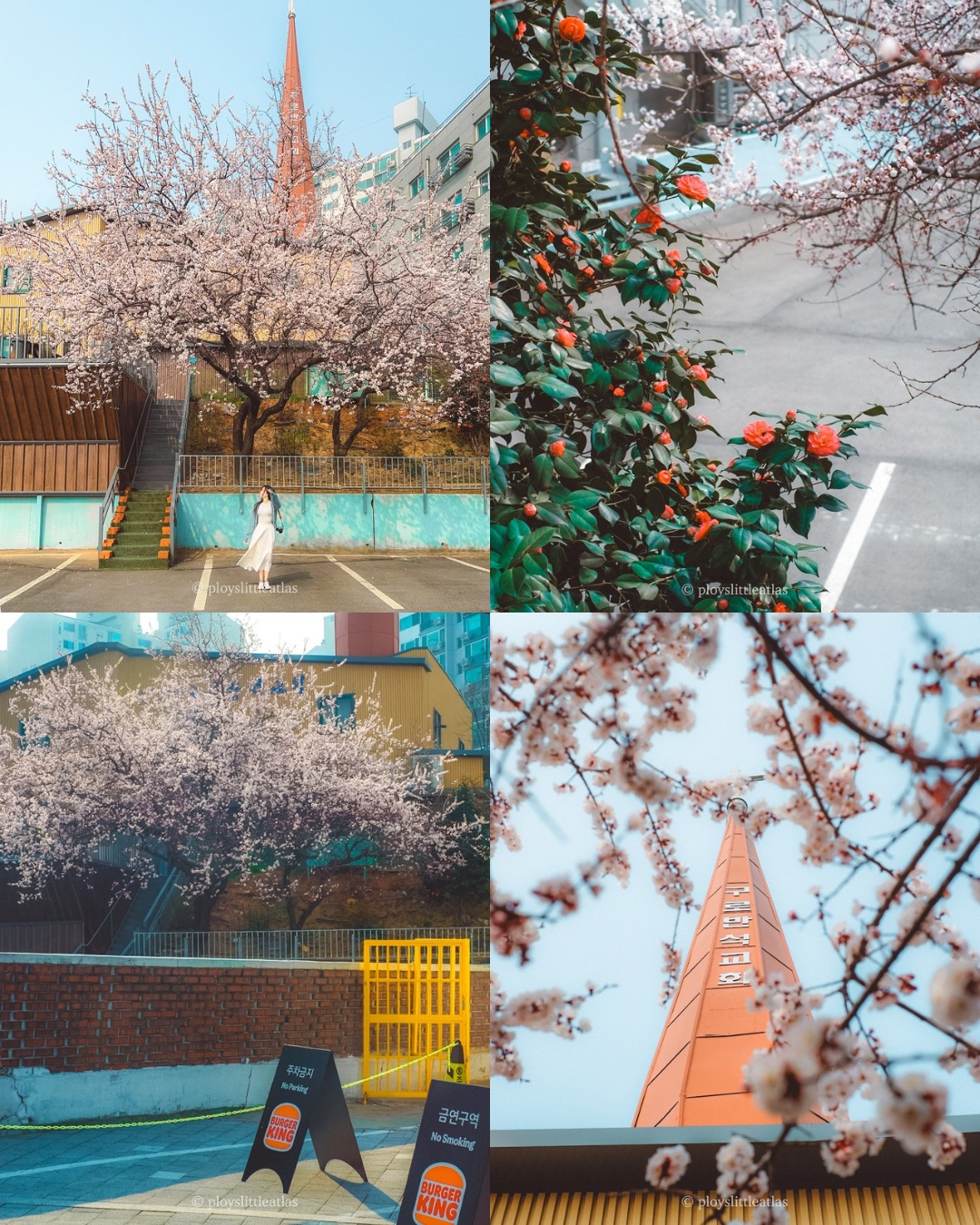
While most people head to massive public parks for their spring fix, some of the most breathtaking views are found in the quiet corners of local neighborhoods. Tucked away on the grounds of Guro Banseok Church, you’ll find a magnificent, towering plum tree that feels like a well-kept secret. This spot offers a unique urban aesthetic where the church’s bright orange spire and the surrounding modern apartment buildings provide a striking contrast to the delicate, ancient-looking branches. What makes this location truly special is the layering of colors; right at the base of the massive plum tree, you’ll find vibrant red camellia shrubs mingling within the flower beds, adding a rich, saturated pop of color to the airy white canopy above. It’s an intimate and peaceful alternative to the city’s more crowded landmarks, located just a short walk from both Guro and Sindorim stations.
Getting There: Reaching this hidden gem is quite easy as it’s nestled between two major transport hubs. You can arrive via Guro Station (Line 1), taking Exit 1 for a pleasant 8-minute walk through the neighborhood. Alternatively, if you’re coming from Sindorim Station (Line 1 & 2), use Exit 2 or 3, which puts you about a 10-minute walk away. The church is situated very close to Guro Geori Park, making it a perfect quick detour if you’re already exploring the local greenery!
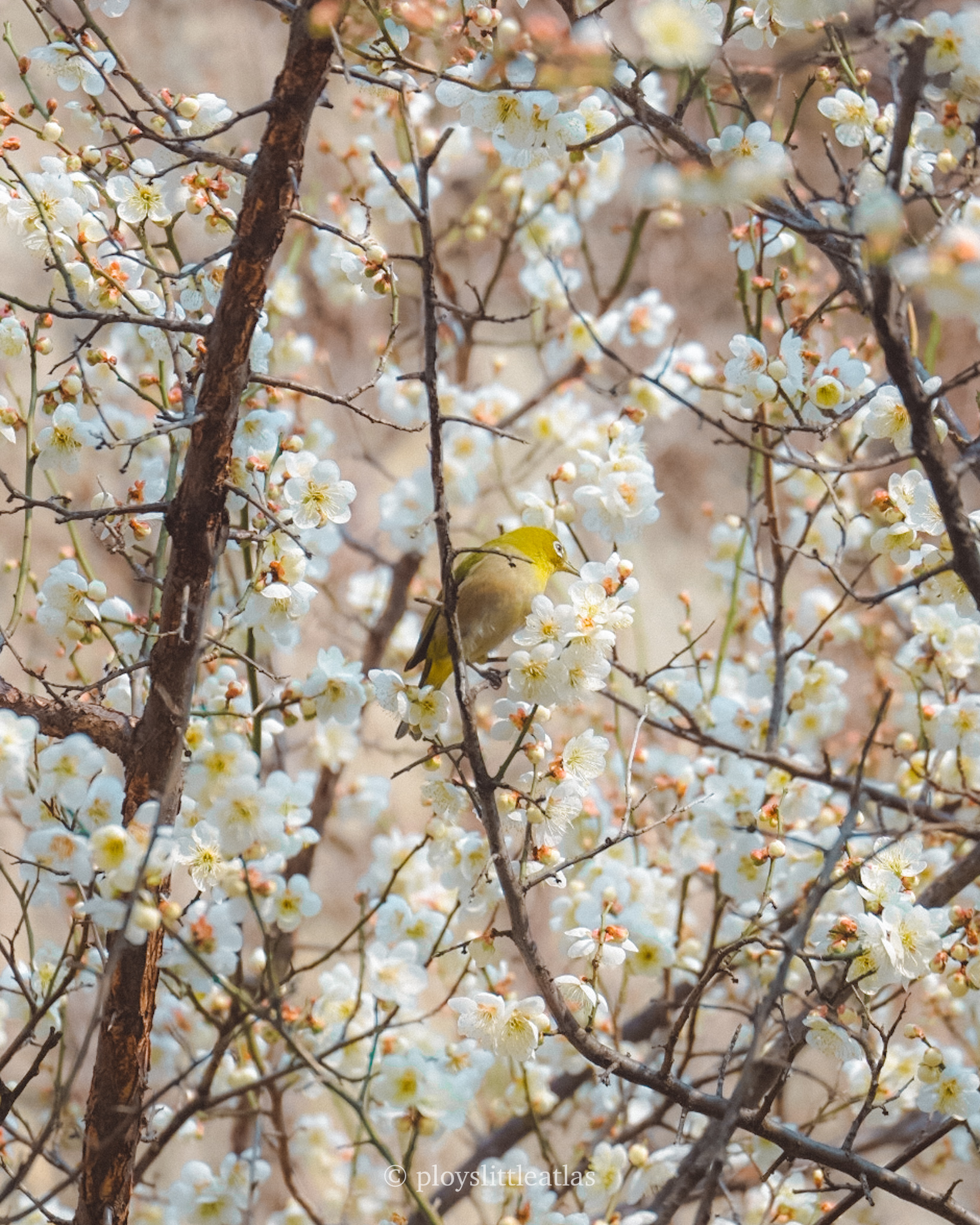
Seoul in spring is a city holding its breath, just waiting to burst into color. While the cherry blossoms get the glory, the plum blossoms offer the soul. They invite you on a quieter, more intimate hunt for the first signs of life after a long winter.
Whether you choose the dramatic, ancient-meets-modern contrasts of Bongeunsa Temple, the peaceful riverside diversity of Yongdap Plum Village, or the authentic urban tunnel of Hyochangwon-ro, each spot offers a unique way to experience this fleeting, beautiful moment.
So, grab your camera, put on your comfy walking shoes, and get out there. The plum blossoms are waiting, and they have a story to tell before the cherry trees steal the show. Happy spring hunting
Map of Spots Mentioned in This Post
Other Seoul Spring Posts You Might Like
Did this entry help you? Or Did you enjoy my photos? Help support my small blog by giving a little cup of joe. I am always grateful when readers reach out wanting to support 🙂
p.s. This post is independently created. However, when you book or purchase something through the retail links, I may earn an affiliate commission to help keep Ploy’s Little Atlas running. Thank you very much for your support!
p.p.s All images used (unless specified) are owned by the author of the blog and permission is required for a repost. Please, reach out via social media channels to ask beforehand if you’d like to use them.